Establishing a new ECMO programme is one of the most resource-intensive and clinically complex undertakings a hospital can pursue. It requires years of preparation, significant capital investment, sustained multidisciplinary training, and ongoing governance to maintain safety and quality. This article outlines the key steps and considerations for hospitals in Australia considering ECMO programme development.
Step 1: Needs assessment and programme definition
Before any equipment is purchased or training begins, the hospital must define the scope of its intended programme:
- What types of ECMO will be offered? (VV only, VA including ECPR, paediatric?)
- What is the anticipated annual case volume? (Minimum 20+ per year recommended for maintenance of competency)
- Is this a primary ECMO centre or a retrieval-capable spoke within a network?
- What relationship will the programme have with local cardiac surgery, cardiology, and other specialties?
Step 2: Clinical team development
ECMO requires a core multidisciplinary team:
- ECMO physicians: intensivists, cardiac surgeons, cardiologists — credentialed in cannulation and ECMO management; typically trained via mentored cases at an established centre
- Perfusionists: essential for circuit priming, circuit change, and technical oversight
- ECMO nurses: ICU nurses trained in circuit monitoring, alarm response, and patient care specific to ECMO
- Physiotherapy, pharmacy, nutrition, social work, and palliative care as part of the extended team
Step 3: Equipment procurement — ARTG compliance
All ECMO equipment used in Australian hospitals must be listed on the Australian Register of Therapeutic Goods (ARTG). Procurement evaluation should cover:
- ARTG listing verification for console, oxygenator, centrifugal pump, and cannulae
- CE Mark (MDR) and international regulatory status
- Local distributor and clinical engineering support availability
- Training and commissioning support provided by the distributor
- Consumables supply chain reliability
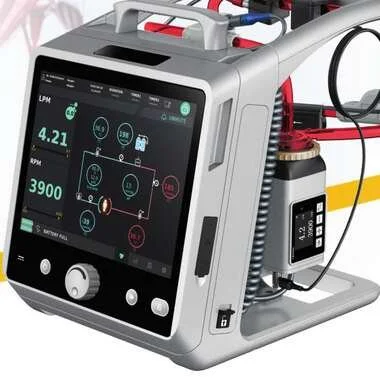
OHM Healthcare is the exclusive distributor of the ARTG-listed Lifemotion ECMO system across Australia and New Zealand, providing local clinical engineering support and training.
Step 4: Simulation and credentialing
No ECMO programme should treat its first patient without simulation-based training. A competency framework should define skills required for each role: cannulation for physicians, circuit troubleshooting for nurses and perfusionists, emergency scenarios for all. Competency maintenance requires ongoing case volume and regular simulation drills.
Step 5: Governance, protocols and quality
Written protocols for cannulation, management, weaning, and complications are mandatory. A morbidity and mortality (M&M) review process for every ECMO case should be embedded from day one. Participation in the ANZICS ECMO registry provides benchmarked outcome data and supports ongoing quality improvement.
To discuss ECMO system procurement, ARTG-listed equipment, and clinical engineering support for new programmes — visit us.
For hospital administrators, biomedical engineers, and clinical leads. Educational only — programme development should be guided by specialist ECMO networks and TGA requirements.

 Request Demonstration →
Service Support →
Request Demonstration →
Service Support →