In early 2026, the first nationally developed, evidence-based guidelines for ECMO use in Australia and New Zealand were published — a landmark for ECMO practice in the region. Developed using GRADE methodology by a multidisciplinary guideline development group, these guidelines provide clinicians with structured, evidence-graded recommendations for the use of venovenous ECMO (VV ECMO) in adult respiratory failure. This article summarises the key recommendations and their clinical implications.
Background: why ANZ-specific guidelines?
Prior to 2026, Australian and New Zealand ECMO practice was guided primarily by international guidelines (ELSO guidelines) and individual centre protocols. While the ELSO guidelines are comprehensive, they were not developed with GRADE methodology and did not reflect the specific ANZ healthcare context: network structure, retrieval capability, available devices, and local outcome data. The 2026 ANZ guidelines address this gap.
Guideline development process
The Guideline Development Group (GDG) was a multidisciplinary panel including intensivists, perfusionists, nurses, patient representatives, and ECMO specialists from Australia and New Zealand. The GRADE framework was used to evaluate evidence quality for each clinical question and translate it into recommendations (strong or conditional) based on the balance of benefits and harms, patient values, and resource implications.
Key recommendations: VV ECMO indications
- Severe ARDS with refractory hypoxaemia: the guidelines provide specific oxygenation threshold criteria for ECMO consideration (broadly aligning with PaO₂/FiO₂ < 80 mmHg) — with GRADE-graded recommendation strength based on available RCT and observational evidence
- Refractory hypercapnia: VV ECMO is recommended for severe hypercapnic respiratory failure unresponsive to maximal ventilation (pH < 7.15)
- Prior optimisation: prone positioning, optimised PEEP and neuromuscular blockade should be attempted before ECMO in most patients
- Centre volume: the guidelines explicitly note that outcomes are better at high-volume centres and that referral to specialist ECMO centres should be considered early in the clinical course
Key recommendations: VV ECMO management
- Ultra-protective lung rest ventilation is recommended during established VV ECMO
- Systematic daily assessment of lung recovery to guide weaning decisions
- Anticoagulation with UFH monitored by ACT and/or anti-Xa
- Nutritional support within 24–48 hours of ECMO initiation
What hasn't changed
The fundamental principles of VV ECMO — drain from vein, oxygenate, return to vein, rest the lung — remain unchanged. The 2026 guidelines refine the evidence basis for when to use ECMO and how to manage it, rather than fundamentally altering established clinical practice.
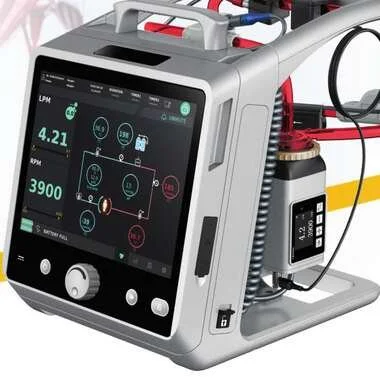
To learn more about the Lifemotion ECMO system — ARTG-listed and exclusively distributed across Australia and New Zealand by OHM Healthcare — visit us.
For healthcare professionals. Educational only — refer to the full 2026 ANZ ECMO guideline document (published in Critical Care and Resuscitation) for complete recommendations.

 Request Demonstration →
Service Support →
Request Demonstration →
Service Support →