This article is intended for healthcare professionals with training in ECMO management.
The phrase most often used to describe what ECMO does is "buys time."
It is a phrase that is accurate as far as it goes — but it glosses over what a clinical team actually does with that time, and what the system has to do reliably to make the time available.
What ECMO actually provides
ECMO provides extracorporeal gas exchange (all configurations) and, in VA-ECMO, haemodynamic support. By taking over or supplementing these functions, it allows the clinical team to address the underlying problem without the immediate constraint of oxygen delivery failure.
The underlying problem might be a bridgeable process — a temporary reversible cause — where the question is whether the patient can be maintained long enough for that cause to resolve or to reach a definitive intervention. It might be a bridge to a decision — where the team needs time to fully assess the clinical situation before committing to a pathway. Or it might be a bridge to a longer-term intervention — organ recovery, transplant assessment, device implantation.
What determines whether the time is used productively is not the ECMO circuit. It is the clinical team, the programme's decision frameworks, and the multidisciplinary process operating alongside the circuit.
What the circuit has to do
For the time ECMO buys to be usable, the circuit has to work reliably — continuously, over hours to days, without unexpected interruption. Circuit failure during support is not a theoretical risk. Oxygenator clotting, pump issues, circuit complications — these are the events that an ECMO programme's maintenance, monitoring, and redundancy architecture is designed to manage.
Reliability in ECMO is an engineering and programme question, not just a clinical one. The pump redundancy architecture, the oxygenator design, the circuit materials, the monitoring parameters, the priming process, the clinical engineering support — these are all components of the reliability equation.
What it asks of the clinical team
ECMO is not a passive intervention. It places sustained demands on the team managing the circuit — ongoing monitoring, anticoagulation management, circuit assessment, troubleshooting, and the continuous clinical evaluation of the patient's trajectory.
Teams that describe ECMO as "just buying time" sometimes underestimate the intensity of that management responsibility. The time is bought; using it well requires sustained, competent, structured clinical work.
OHM Healthcare's role
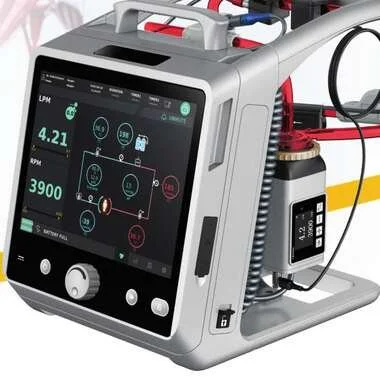
OHM Healthcare provides the Lifemotion ECMO platform and the clinical engineering infrastructure behind it in Australia and New Zealand. The platform's integrated monitoring, pump redundancy, and circuit design are the engineering foundation. What the clinical team builds on that foundation is the programme.
Contact OHM Healthcare at sales@ohmhealthcare.com.au or visit lifemotionecmo.com.au for enquiries.
For healthcare professionals and healthcare organisations. Product availability and specifications subject to the locally approved Instructions for Use.
OHM Healthcare · sales@ohmhealthcare.com.au · 03 9115 7464 · lifemotionecmo.com.au

 Request Demonstration →
Service Support →