Procuring an ECMO system for an Australian hospital is a multi-stakeholder process involving clinical leadership, biomedical engineering, procurement and finance, infection control, and executive governance. Unlike commodity medical consumables, ECMO system procurement involves a capital purchase of significant complexity — the acquisition must satisfy TGA regulatory requirements, clinical evaluation standards, biomedical engineering assessment criteria, and health service procurement governance frameworks. This guide provides a structured overview of the ECMO procurement process for Australian health services, covering the key decision points and compliance requirements at each stage.
Step 1: Define the clinical programme scope
Before evaluating any specific ECMO system, the clinical programme must define its intended scope. This determines the technical specification required:
- Modalities: Will the programme run VV ECMO only, or VV and VA ECMO? Is ECPR in scope? Is retrieval a planned function?
- Patient population: Adults only, or paediatric and neonatal cases? (This affects cannula range and console specifications)
- Volume projections: Expected annual case numbers, peak concurrent cases, and anticipated run durations inform consumable stock requirements
- Retrieval function: If the programme will perform mobile ECMO — cannulation at referring hospitals or transport of cannulated patients — transport compatibility is a mandatory specification criterion
- Research participation: Participation in national registries (EXCEL) or clinical trials may impose additional device documentation requirements
Step 2: Verify ARTG listing — the non-negotiable first step
All ECMO system components used in Australian hospitals must be listed on the Australian Register of Therapeutic Goods (ARTG), administered by the Therapeutic Goods Administration (TGA). This is a legal requirement under the Therapeutic Goods Act 1989. Before any clinical evaluation, procurement teams should verify ARTG listing for all proposed system components:
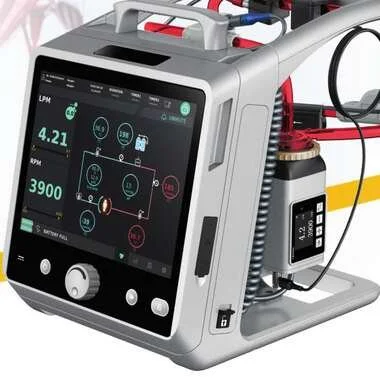
- The ECMO console (centrifugal pump drive unit)
- The centrifugal pump head (impeller assembly)
- The membrane oxygenator
- The ECMO circuit set (tubing, connectors)
- Any accessories being considered (cannulae, pressure transducers, heat exchangers)
ARTG status can be verified at no cost using the TGA's public ARTG online search at tga.gov.au/resources/artg. Procurement officers should confirm that each ARTG entry is current (not cancelled or suspended), that the sponsor is the entity supplying the device in Australia, and that the device description matches the product being evaluated.
The Lifemotion ECMO system holds four current ARTG entries sponsored by SASS Biomedical Engineering Services t/a OHM Biomedical Engineering Services: console (528964), oxygenator (528771), pump head (528772), and circuit set (528773) — all listed in July 2026.
Step 3: Clinical evaluation — engage the ECMO team
Clinical evaluation of an ECMO system should be led by the programme's senior ECMO clinicians — typically the intensivist or cardiac surgeon who leads the programme — in collaboration with perfusionists, ECMO nurses, and the coordinator. Key evaluation dimensions include:
- Haemocompatibility: Surface coating technology (phosphorylcholine, heparin, no coating), oxygenator construction (polymethylpentene hollow fibres vs polypropylene), and demonstrated performance in reducing circuit-related haemolysis and thrombosis
- Console interface: Display clarity, alarm management, priming sequence design, guided startup, and event logging — evaluated in simulated conditions and where possible in wet-lab demonstrations
- Pump redundancy: What happens to the patient if the pump fails? Three-layer redundancy (primary centrifugal, backup drive, manual hand crank) is the gold standard; evaluate how backup engagement is managed clinically
- Oxygenator durability: Rated duration, evidence of real-world run duration, and performance under anticoagulation protocols typical at your centre
- Transport capability: Battery runtime, weight, dimensions, and retrieval transport system compatibility — critical for programmes with a retrieval function
- Circuit range: Availability of different circuit lengths and priming volumes for adult, paediatric, and neonatal use if applicable
Step 4: Biomedical engineering assessment
The hospital's biomedical engineering team plays a critical role in ECMO system procurement. Their assessment covers:
- Regulatory documentation: ARTG certificate, CE Mark or equivalent international regulatory approval, manufacturer quality system certification (ISO 13485)
- Electrical safety: Compliance with AS/NZS 3551 — the Australian standard for medical electrical equipment maintenance — and compatibility with the hospital's electrical safety testing programme
- Maintenance requirements: Scheduled maintenance intervals, calibration requirements, and any specialised tools or software required for maintenance. Are these functions performed by the supplier or by in-house biomedical engineering?
- Distributor qualification: The biomedical engineering team should assess whether the local distributor has the technical capability to provide equipment support. ISO 9001:2015 certification, documented maintenance procedures, and local service presence are indicators of a qualified distributor
- Parts and consumables availability: Confirm that the distributor maintains Australian stock of all consumables (oxygenators, circuit sets, pump heads) and critical spare parts — not relying on international air freight for components required during an active patient run
- Software and connectivity: HL7 or similar hospital information system integration requirements, data export capability for ICU documentation, and any cybersecurity considerations
Step 5: Procurement pathway — public and private hospitals
The formal procurement pathway differs between public and private health systems:
- Public hospitals (state health services): Typically require procurement through state health department supplier panels (NSW HealthShare, Victorian Health Purchasing Board, QLD Health etc.), or via competitive tender for capital equipment above threshold values. ARTG verification, value-for-money assessment, and evaluation against the clinical specification are mandatory. Some state health services maintain approved ECMO equipment supplier lists
- Private hospitals: Have greater procurement flexibility but still require ARTG compliance, and typically involve clinical governance review and capital equipment committee approval for major equipment purchases
- Public-private partnerships and teaching hospitals: May have hybrid procurement governance structures reflecting both public funding and private management arrangements
OHM Healthcare is experienced in supporting ECMO system procurement through all Australian state health procurement frameworks, including preparation of ARTG documentation packages, compliance with state-specific supplier qualification requirements, and submission of tender responses aligned with health service evaluation criteria.
Step 6: Consumable supply agreement and lifecycle support
ECMO procurement extends beyond the initial capital purchase. A complete lifecycle support agreement should cover:
- Consumable supply — ongoing stock of oxygenators, circuit sets, pump heads, and ancillary consumables at negotiated volumes and pricing
- Equipment maintenance — scheduled preventive maintenance, calibration, and safety testing per AS/NZS 3551 requirements
- Emergency response — defined response times and on-call support for equipment failures during active patient ECMO runs
- Clinical training — initial staff training and ongoing competency support for new team members
- Software and firmware updates — managed update processes that maintain regulatory compliance and do not interrupt operational capability
- End-of-life transition — defined equipment replacement cycle and transition pathway to next-generation equipment
OHM Healthcare: ECMO procurement partner for Australian health services
OHM Healthcare provides end-to-end support for Lifemotion ECMO system procurement at Australian hospitals. As an ISO 9001:2015 certified, TGA-compliant clinical engineering services company and the exclusive ANZ distributor for Lifemotion ECMO, OHM Healthcare brings together the regulatory documentation, clinical expertise, and biomedical engineering capability required to support health service ECMO procurement from initial evaluation through ongoing lifecycle management.
To discuss ECMO procurement for your Australian hospital — contact OHM Healthcare to request a Lifemotion ECMO system evaluation, documentation package, or clinical demonstration.
For hospital procurement officers, biomedical engineers, ECMO programme directors and clinical leads. Educational only — ECMO procurement requires specialist clinical, engineering and legal input tailored to each health service's governance requirements. Regulatory information current at time of publication.

 Request Demonstration →
Service Support →
Request Demonstration →
Service Support →