One of the most powerful tools for improving ECMO outcomes across Australia and New Zealand is the ANZICS (Australian and New Zealand Intensive Care Society) ECMO registry — a bi-national prospective registry that collects detailed clinical data on every ECMO run across contributing centres. This article explains what the registry is, what data it collects, and how it contributes to improving care.
What is the ANZICS ECMO registry?
The ANZICS Centre for Outcome and Resource Evaluation (ANZICS CORE) manages several clinical quality registries for intensive care in Australia and New Zealand. The ECMO dataset was added to this registry infrastructure following a request from national, state and territory health departments, recognising the need for systematic data collection to measure activity, quality, and outcomes across ECMO programmes.
What data does the registry collect?
The registry collects comprehensive patient-level data for each ECMO run, including:
- Patient demographics (age, sex, BMI, comorbidities)
- ECMO indication and diagnosis
- Type of ECMO (VV, VA, VVA), cannulation approach and configuration
- Duration of ECMO support
- Complications (bleeding, thrombosis, neurological events, circuit events)
- Concurrent therapies (RRT, prone positioning, inotropes)
- Outcomes (survival to ICU discharge, hospital discharge, and 90-day and 12-month outcomes where available)
- Patient-reported outcome measures in selected centres
The EXCEL registry: enhanced detail for research
The EXCEL (EXtracorporeal Life support in Australia and New Zealand) registry is a high-detail prospective registry that collects more granular data than the standard ANZICS CORE dataset — including patient-reported outcomes (quality of life, functional status, psychological wellbeing) and detailed costs. EXCEL data have contributed to published analyses of ECMO outcomes, costs, and patient experience in the ANZ context.
How registry data improve practice
- Benchmarking: centres receive comparative reports of their outcomes against the aggregate ANZ cohort — identifying outliers (both better and worse than average) and triggering quality improvement
- Research: registry data power observational studies that inform guideline development; the 2026 ANZ VV ECMO guidelines drew on registry data
- Accountability: health departments can track ECMO activity and outcomes across the system, supporting workforce and infrastructure planning
- Patient selection: aggregate outcome data inform ECMO eligibility criteria and prognostic counselling
For new ECMO programmes
Participation in the ANZICS ECMO registry is strongly encouraged — and in some jurisdictions required — for all new and established ECMO programmes. Registry participation signals commitment to quality and transparency, and provides the external feedback that even experienced programmes need to improve.
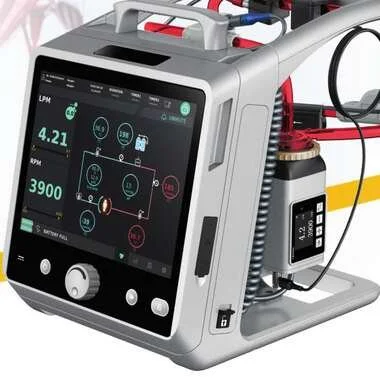
To learn more about the Lifemotion ECMO system — ARTG-listed and exclusively distributed across Australia and New Zealand by OHM Healthcare — visit us.
For ECMO programme leaders, intensivists and researchers. Educational only — contact ANZICS CORE for registry participation information.

 Request Demonstration →
Service Support →
Request Demonstration →
Service Support →