Procuring an ECMO system is a significant capital and operational commitment. Beyond price, the choice of ECMO platform affects patient safety, clinical workflow, training burden, consumable costs, and the hospital's ability to maintain the service over time. This guide identifies the most important questions procurement teams — including clinical leads, biomedical engineers, and finance managers — should ask before selecting an ECMO system.
1. Is the system ARTG-listed for all intended indications?
Verify that the console, oxygenator, centrifugal pump head, and all intended cannulae hold current ARTG listings for the intended clinical use (adult VV, VA, paediatric, neonatal). The TGA's ARTG public search at tga.gov.au is the definitive source. Do not rely on supplier assurances alone — check directly.
2. Does the system hold CE Mark under MDR (2017/745)?
CE Mark under the current EU Medical Device Regulation (MDR) — not the older MDD — represents the most current and rigorous European regulatory standard. MDR requires clinical evidence, post-market surveillance, and Unique Device Identification (UDI). MDR compliance provides confidence in device quality and is the basis for TGA mutual recognition.
3. Who is the local distributor and what clinical engineering support is provided?
For a life-critical device like ECMO, local support is not optional. Key questions:
- Is there a local Australian distributor with biomedical engineering capability?
- What is the guaranteed response time for equipment fault?
- Are replacement parts and consumables stocked locally in Australia?
- What happens to consumable supply during a global shortage (as occurred during COVID-19)?
4. What training and commissioning support is included?
- Does the distributor provide device-specific training for nurses, perfusionists, and physicians?
- Are circuit set-up and priming workshops available?
- Is there ongoing training support as staff turn over?
5. Is the console designed for retrieval and transport?
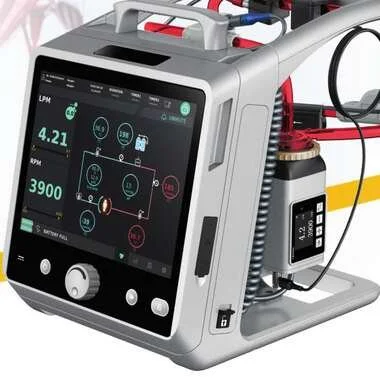
For any hospital planning retrieval ECMO (or that may need to transport ECMO patients to another centre), the console must be compact, battery-capable for extended periods, and robust in transport conditions. Enquire specifically about battery duration at typical ECMO flows, and compatibility with aircraft and road ambulance mounting systems.
6. What are the true cost-of-ownership numbers?
The capital cost of the console is only part of the picture. Consider:
- Cost per ECMO run (oxygenator + circuit kit + cannulae)
- Annual service contract costs
- Training costs over the programme lifecycle
- Circuit life and change-out frequency
7. What is the clinical evidence base for this specific system?
Request published peer-reviewed clinical data — registry data, outcomes series, or clinical trial results — specifically for the system being procured. Favour systems with published ANZ clinical experience.
To discuss ECMO system procurement, ARTG-listed equipment, and clinical engineering support — contact OHM Healthcare, exclusive ANZ distributor of the Lifemotion ECMO system.
For hospital procurement teams, biomedical engineers, and clinical leads. Educational only — procurement decisions should follow your institution's tender and compliance processes.

 Request Demonstration →
Service Support →
Request Demonstration →
Service Support →