Weaning from ECMO: approaches for VV and VA configurations
Placing a patient on ECMO is a decision. Taking them off is a process — one that is distinct for each configuration, informed by different physiological endpoints, and subject to a different set of complications. Premature decannulation risks placing a patient back on a device they need. Prolonged ECMO beyond recovery windows exposes them to accumulating circuit-related complications: bleeding, thrombosis, infection, and haemolysis.
This article covers the clinical approach to weaning for both VV and VA-ECMO, the echocardiographic and physiological parameters used to assess readiness, and the decision framework when weaning is not achievable.
The shared principles
Before discussing configuration-specific approaches, three principles apply to both:
- Weaning is a trial, not a commitment. A weaning attempt that reveals inadequate native organ function should be reversed. A failed wean is diagnostic information, not a clinical failure.
- Low ECMO flow is not a safe resting state. At flows below 1.0–1.5 L/min, circuit thrombosis risk rises sharply. Low-flow weaning trials should be time-limited — a maximum of 30–60 minutes at most centres — and anticoagulation should be optimised during this period.
- The decision to decannulate is multidisciplinary. The ECMO physician, perfusionist, bedside nurse, and (where cardiac surgery was involved) the surgical team should all be involved in the weaning decision. Decannulation is a procedure with its own risk, and the decision to proceed should be deliberate.
Weaning VV-ECMO: respiratory recovery
In VV-ECMO, the circuit provides gas exchange without contributing to cardiac output. Weaning tests whether native lung function has recovered sufficiently to sustain adequate oxygenation and ventilation without extracorporeal support.
The sweep gas reduction trial
The primary weaning method for VV-ECMO is progressive reduction of sweep gas flow (the gas passing through the oxygenator membrane) while maintaining pump blood flow and monitoring the patient's response.
Reducing sweep gas flow reduces CO₂ removal and oxygen delivery from the circuit. As native lung function improves, the patient compensates — maintaining acceptable SpO₂ and PaCO₂ on tolerable ventilator settings. The trial proceeds through stepwise reductions to zero sweep gas flow (a "clamp trial").
Clamp trial
At zero sweep gas, all gas exchange must be achieved by native lungs. The pump continues to run (blood flow is maintained) to prevent circuit thrombosis, but no gas exchange occurs across the oxygenator.
The patient is observed for 30–60 minutes on tolerable ventilator settings. Acceptable parameters vary by centre, but typically:
- SpO₂ ≥ 92–94% on FiO₂ ≤ 0.60
- PaCO₂ within acceptable range (≤ 50–55 mmHg, or within the patient's tolerated range)
- pH ≥ 7.30
- No significant haemodynamic deterioration
Markers of respiratory recovery
- Improving static lung compliance on the ventilator
- Declining FiO₂ requirement on the ventilator
- Improving chest imaging (resolving consolidation or infiltrates)
- Reducing ECMO contribution to total oxygenation (rising native SpO₂ relative to circuit fraction)
Ventilator management during VV-ECMO weaning
As sweep gas is reduced and the contribution of the circuit diminishes, the ventilator must be adjusted to take over gas exchange. Lung-protective settings (low tidal volume, PEEP titrated to oxygenation) should be maintained throughout. The goal is to confirm the patient can be maintained on conventional ventilation, not to extubate during the ECMO weaning trial itself.
Weaning VA-ECMO: cardiac recovery
In VA-ECMO, the circuit provides both haemodynamic support and gas exchange. Weaning tests whether native cardiac function has recovered sufficiently to sustain systemic perfusion without mechanical assistance.
Flow reduction trial
VA-ECMO weaning proceeds through stepwise reductions in pump blood flow — typically 0.5 L/min decrements — with concurrent haemodynamic assessment at each level.
As ECMO flow decreases, the native heart must generate an increasing proportion of cardiac output. Inotropic or vasopressor support is adjusted in parallel — the circuit is a bridge, not a substitute for medical optimisation.
Haemodynamic parameters at each flow step
At each step, the clinical team assesses:
- Mean arterial pressure (MAP): target typically ≥ 65 mmHg; a decline at lower ECMO flows indicates inadequate native output
- Cardiac index (if PA catheter or thermodilution available): target > 2.2 L/min/m²
- Mixed venous oxygen saturation (SvO₂): a fall indicates inadequate oxygen delivery relative to demand
- Lactate: a rising lactate trend during the weaning trial suggests inadequate systemic perfusion
Echocardiographic assessment during weaning
Transthoracic or transoesophageal echocardiography is the primary tool for assessing cardiac recovery during VA-ECMO weaning. At each flow step:
- LVEF > 20–25%: a threshold used at many centres, though interpretation must account for afterload — VA-ECMO increases aortic afterload, which may underestimate recovery
- LVOT VTI (velocity-time integral) > 10 cm: a marker of stroke volume; correlates with cardiac output at a given heart rate
- Returning aortic pulse pressure > 10 mmHg: the widening of the pulse pressure waveform indicates native pulsatile flow — its return is one of the earliest signs of cardiac recovery
- Left ventricular distension: a distended, non-contracting LV at low ECMO flow is a contraindication to weaning and may indicate the need for LV venting
The low-flow hazard
At ECMO flows below 1.0–1.5 L/min, stagnation within the circuit — particularly in the oxygenator and in the low-flow areas of the venous return limb — dramatically increases circuit thrombosis risk. Low-flow weaning trials should be time-limited. If decannulation is not anticipated within 30–60 minutes at low flow, flow should be returned to a safe minimum (typically 1.5–2.0 L/min) while the team prepares.
When weaning is not achievable
When a patient fails repeated weaning attempts after adequate time on ECMO support, the clinical and ethical framework shifts. Options include:
- Bridge to cardiac transplantation: for patients meeting transplant criteria, conversion to a durable left ventricular assist device (LVAD) or listing for heart transplantation while on ECMO provides a defined pathway. ECMO is rarely a long-term bridge — LVADs offer more durable support and lower circuit-related morbidity.
- Bridge to durable VAD: for patients not immediately transplant candidates, a durable LVAD (with or without RVAD) can provide longer-term support while the clinical picture clarifies.
- Palliative withdrawal: when neither transplant nor durable VAD is appropriate — due to patient preference, futility assessment, or absence of a reversible cause — withdrawal of ECMO support is a legitimate and humane option. This is a complex multidisciplinary and ethical decision involving the patient, family, treating team, and palliative care.
The decision framework for patients who do not wean should be established early in the ECMO run — ideally within 48–72 hours of initiation — so that clear timelines, goals, and escalation options are documented before the clinical situation deteriorates further.
Decannulation
Once the decision to decannulate is made, the procedure itself carries risk proportional to the size of the cannulae and the anticoagulation state. Venous cannulae are typically removed at the bedside with manual pressure. Arterial cannulae in VA-ECMO may require surgical repair, particularly after prolonged cannulation or where the vessel has been compromised. Peripheral arterial decannulation requires verification of adequate distal limb perfusion before and after removal.
Reference: ELSO Guidance Documents — Weaning and Decannulation. Extracorporeal Life Support Organization. elso.org
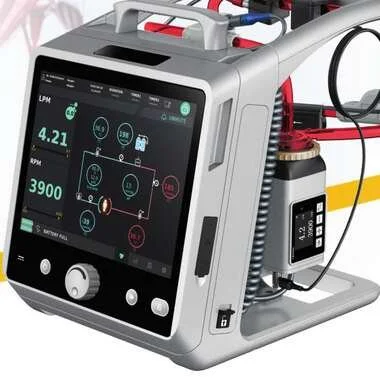
To learn more about the Lifemotion ECMO system — ARTG-listed and exclusively distributed across Australia and New Zealand by OHM Healthcare — visit us.
For healthcare professionals. Educational only — ECMO weaning decisions require specialist clinical assessment and institutional governance frameworks. Refer to local protocols and the approved Instructions for Use.

 Request Demonstration →
Service Support →
Request Demonstration →
Service Support →