ECMO oxygenator and pump head changeout: when to change and how to prepare
Component changeouts are among the highest-risk procedures performed on a patient receiving ECMO. Unlike most ICU interventions, a pump head or oxygenator change requires brief interruption or manipulation of extracorporeal flow, often on a critically ill patient with little haemodynamic reserve. Done well, it is routine. Done unprepared, it can be catastrophic.
This article covers the clinical signals that indicate a component change is needed, the preparation required for a safe changeout, and practical considerations for ECMO teams and biomedical engineers working with current-generation circuits.
Why components need to change
ECMO circuits are designed for extended use — typically days to weeks — but they are not indefinite. Blood contact with synthetic surfaces activates the coagulation cascade and complement system, and over time, thrombus formation within the circuit becomes inevitable despite systemic anticoagulation. The oxygenator and the pump head are the two components most susceptible to clinically significant failure.
Signs the oxygenator needs changing
The membrane oxygenator transfers oxygen into blood and removes CO₂ across hollow-fibre membranes. Thrombus accumulating within the oxygenator manifests in several ways:
- Rising transmembrane pressure gradient (ΔTMP): the pressure difference across the oxygenator inlet and outlet rises as internal resistance increases. Most centres define a ΔTMP threshold (e.g. >50–80 mmHg, centre-dependent) above which changeout is required.
- Declining post-oxygenator PaO₂: if gas exchange deteriorates without an evident patient-side explanation, oxygenator failure should be suspected. Compare pre- and post-oxygenator blood gas samples.
- Visible clot burden: dark discolouration, streaking, or visible thrombus within the oxygenator housing observed through the transparent casing.
- Rising plasma-free haemoglobin: haemolysis (destruction of red blood cells) is a marker of mechanical injury within the circuit. Sustained elevation above 50 mg/dL (some centres use 100 mg/dL as the action threshold) in the absence of a pump-related cause points to oxygenator pathology.
- Gas leak into the blood compartment: plasma leak through the membrane (causing "wet lung" in the gas outflow) or gas emboli in the blood compartment indicate membrane integrity failure.
Signs the centrifugal pump head needs changing
The centrifugal pump head generates flow through rotational impeller movement. Thrombus in the pump head or bearing wear presents as:
- Persistent haemolysis: unexplained, sustained rise in plasma-free haemoglobin not attributable to cannula position, circuit kinking, or suction events. The pump impeller is a primary site of mechanical haemolysis.
- Abnormal heat generation: excessive warmth at the pump head, perceptible on inspection, may indicate bearing friction or thrombus accumulation.
- Vibration or audible noise: any change in pump acoustics or vibration pattern warrants investigation.
- Shift in the flow-RPM relationship: at a fixed RPM, the flow delivered by the circuit depends on preload and afterload. A sudden or progressive reduction in flow at the same RPM — without a change in preload or cannula position — may indicate pump head dysfunction.
- Visible thrombus: on inspection of transparent pump head casings.
Planned vs emergency changeouts
A planned (pre-emptive) changeout is significantly safer than an emergency one. An emergency occurs when a component fails acutely — with acute haemodynamic deterioration, abrupt flow loss, or impending circuit failure. The team is under time pressure, the environment is not set up, and the patient has no reserve.
A planned changeout occurs when the clinical team recognises early warning signals and acts before failure occurs. The procedure can be briefed, equipment prepared, the haematology adjusted, the ICU space optimised, and the team practised through a dry run before hands touch the circuit.
The clinical principle: change the circuit at the first reliable sign of dysfunction, not when it fails.
Preparation for a safe changeout
Preparation is the dominant determinant of changeout safety. The following steps are standard across experienced ECMO centres:
1. Pre-prime the replacement circuit
The replacement oxygenator (or pump head, or full circuit) should be primed and deaired before the procedure begins. This removes air from the circuit and verifies the replacement component is functional. Priming is performed by the perfusionist or designated ECMO specialist using circuit priming protocols.
2. Anticoagulation adjustment brief
Changeouts are typically performed with a bolus of additional heparin immediately before the procedure and a period of higher anticoagulation after, to reduce the risk of thrombosis on the newly changed component during the transition. The haematology team should be notified if the patient has a complex coagulation picture.
3. Assign team roles explicitly
At minimum: one person managing the patient and haemodynamics, one performing the circuit manipulation, and one managing the replacement component. In complex situations (e.g. VA-ECMO with haemodynamic instability), additional team members may be required.
4. Dry-run the clamping sequence
Before touching the circuit, the team should walk through the exact sequence of clamp placement, component disconnection, and reconnection on the replacement circuit. This is not a theoretical exercise — it is a physical rehearsal. Misplaced clamps or incorrect sequencing during a real changeout can result in air introduction or uncontrolled flow.
5. Prepare for haemodynamic instability
Even a brief reduction in ECMO flow has haemodynamic consequences, particularly in VA-ECMO patients. Vasoactive agents should be at the bedside, ready for immediate up-titration. The medical officer managing the patient must be present for the entire procedure.
The changeout procedure: key principles
Specific changeout techniques vary between platforms, and teams must be trained on their own circuit and pump system. Across platforms, several principles are consistent:
- Never introduce air into the circuit. All connections must be made under fluid (submerged or flooded) or with meticulous visual confirmation that no air is present.
- Minimise flow interruption time. If full circuit stop is required, the team should be drilled to complete the exchange within the agreed time window.
- Inspect the old component after removal. Document the thrombus distribution and compare with ΔTMP and haemolysis trends — this builds institutional knowledge about circuit longevity in your patient population.
- After reconnection, confirm flow, deair the circuit on the pump, and recheck all pressure readings before returning to target flow.
Documentation and review
Component changes should be documented with timing, indication, anticoagulation at time of change, and the clinical status of the patient before and after. This data feeds into quality improvement review and helps programmes set evidence-informed thresholds for their patient population and circuit system.
Training and simulation
Circuit changeout is a technical skill that degrades without practice. ECMO programmes should include changeout simulation in their competency programme — at a minimum annually for all rostered ECMO staff, and as part of initial credentialing. Simulation with expired or decommissioned circuits is effective and safe.
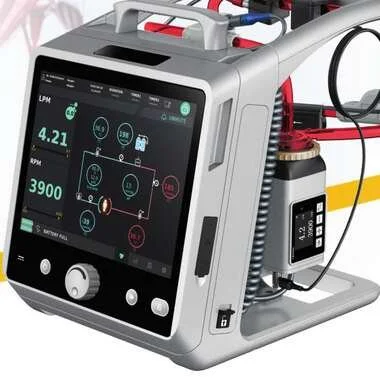
To learn more about the Lifemotion ECMO system — ARTG-listed and exclusively distributed across Australia and New Zealand by OHM Healthcare — visit us.
For healthcare professionals. Educational only — ECMO circuit management requires specialist clinical oversight and institutional governance frameworks.

 Request Demonstration →
Service Support →
Request Demonstration →
Service Support →