Initiating VA ECMO in cardiogenic shock is a bridge — not a destination. Every patient placed on VA ECMO needs a defined exit strategy: a clear plan for where they are going after ECMO. The three principal exit strategies are bridge to recovery (BTR), bridge to durable device (BTD), and bridge to transplant (BTT). A fourth, bridge to decision (B2D), is used when the trajectory is unclear and requires further observation before commitment to a long-term strategy.
Bridge to recovery (BTR)
The ideal outcome: the heart recovers sufficient function to be weaned from ECMO without further intervention. BTR is most likely in:
- Acute myocarditis (particularly fulminant lymphocytic myocarditis, which has a high recovery rate)
- Reversible post-cardiotomy stunning after cardiac surgery
- Drug toxicity causing temporary myocardial depression
- AMI-CS where complete revascularisation has been achieved early
Recovery is assessed by daily echocardiography. Pulsatility returning to the arterial waveform, improving LVEF, and decreasing vasopressor requirements are positive signs. A formal weaning trial is performed when these criteria are met.
Bridge to durable device (BTD)
When the heart does not recover on ECMO but the patient is otherwise a suitable candidate, transition to a durable left ventricular assist device (LVAD) — most commonly the HeartMate 3 — is the next step. LVADs can support the circulation for years. They allow the patient to leave hospital, return to meaningful functional life, and may serve as BTT or permanent (destination) therapy.
Transition from VA ECMO to LVAD requires cardiac surgery. The patient must be clinically stable enough — despite cardiac failure — to survive the operative intervention. Timing is critical: too early increases operative risk; too late risks worsening end-organ function that may preclude LVAD implantation.
Bridge to transplant (BTT)
For patients who are candidates for cardiac transplantation and whose heart has not recovered on ECMO, listing for urgent transplant while maintaining ECMO support (or transitioning to a more durable support) is the pathway. BTT via VA ECMO is constrained by the difficulty of maintaining ECMO for weeks-to-months while awaiting a donor heart. Transition to LVAD for BTT provides more stable long-term support.
In Australia, cardiac transplantation is performed at St Vincent's Hospital Sydney, Alfred Hospital Melbourne, Royal Adelaide Hospital, The Prince Charles Hospital Brisbane, and Fiona Stanley Hospital Perth.
Bridge to decision (B2D)
When the prognosis is unclear — neurological status is uncertain post-arrest, the underlying diagnosis is incomplete, or organ function is too compromised for LVAD or transplant — a time-limited trial of VA ECMO is used to gather information. Clear time limits and decision points must be agreed with the family and multidisciplinary team at initiation of ECMO.
When recovery does not occur and destination therapy is not possible
If the heart does not recover and durable MCS or transplant are not options (due to age, comorbidity, patient preference, or organ damage), withdrawal of ECMO with palliative support is the compassionate option. This requires careful discussion with the patient (where possible), family, and the multidisciplinary team. Palliative care should be involved early — not only at the point of withdrawal.
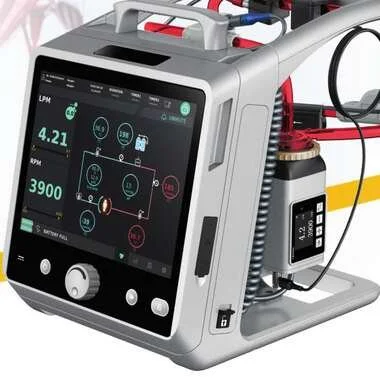
To learn more about the Lifemotion ECMO system — ARTG-listed and exclusively distributed across Australia and New Zealand by OHM Healthcare — visit us.
For cardiac intensivists, cardiologists and cardiac surgeons. Educational only — VA ECMO exit strategy decisions require multidisciplinary specialist input.

 Request Demonstration →
Service Support →
Request Demonstration →
Service Support →