Starting an ECMO programme requires more than purchasing a console. A complete ECMO capability encompasses the primary circuit and console, a full range of cannulae, emergency backup equipment, consumables for ongoing circuit maintenance, monitoring adjuncts, and the infrastructure to support circuit changes and emergencies at any hour. This article provides a comprehensive equipment checklist for hospitals setting up new ECMO programmes in Australia.
Primary ECMO console and circuit
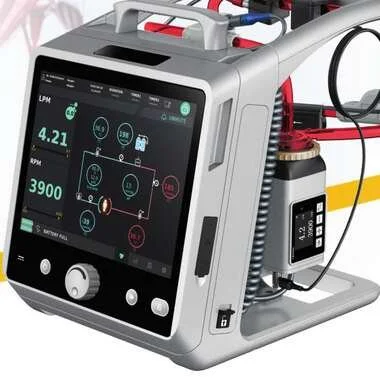
- ECMO console: integrated centrifugal pump drive, flow measurement, pressure monitoring, alarm system, battery backup — ARTG-listed
- Centrifugal pump heads: sufficient stock for circuit changes (minimum 2–3 per patient run)
- Membrane oxygenators: ARTG-listed; stock sufficient for planned runs and at least one circuit change per patient
- ECMO circuit tubing sets: pre-assembled tubing sets matched to the console; ARTG-listed
- Heat exchanger and water bath: integrated or standalone; capable of both heating and cooling
Cannulae: full range required
Cannulae must cover adult VV and VA configurations and the full range of patient sizes:
- Venous drainage cannulae: 20, 22, 24 Fr (adult)
- Venous return cannulae (jugular): 19, 21 Fr
- Arterial return cannulae: 15, 17 Fr with integrated distal perfusion port or separate DPC sheaths
- Dual-lumen bicaval cannulae (e.g., 27, 31 Fr) for VV ECMO with greater mobility
- Paediatric range if paediatric ECMO is intended
Monitoring and adjunct equipment
- Bedside ACT/activated clotting time analyser (e.g., Hemochron)
- Anti-Xa laboratory access (available in most Australian hospital pathology labs)
- Near-infrared spectroscopy (NIRS) for cerebral and limb monitoring
- Point-of-care gas analyser for post-membrane blood gases
- Inline circuit pressure transducers (oxygenator inlet and outlet)
- Echocardiography machine (TOE and TTE capability for cannula positioning and cardiac monitoring)
- Ultrasound machine for cannulation guidance
Emergency and backup equipment
- Manual hand-crank or emergency pump for power failure
- Haemostatic clamps — minimum 4 per bedside, permanently available
- Spare pump head at bedside
- Pre-primed emergency backup circuit (some centres maintain one per active ECMO patient)
- Air bubble detector and automatic clamp system (integrated into most modern consoles)
Consumables supply and inventory management
Consumable inventory management is critical — stockouts of oxygenators or circuit sets during an active ECMO run are unacceptable. Establish minimum stock levels, re-order triggers, and a relationship with the distributor for emergency supply. OHM Healthcare maintains Australian stock of all Lifemotion ECMO system consumables.
To discuss ECMO equipment procurement, ARTG-listed products, and support for new ECMO programmes — contact OHM Healthcare, exclusive ANZ distributor of the Lifemotion ECMO system.
For ECMO programme directors and hospital biomedical engineering teams. Educational only — equipment requirements vary by programme scope and patient volume.

 Request Demonstration →
Service Support →
Request Demonstration →
Service Support →