The traditional image of an ECMO patient — sedated, paralysed, immobile — is being challenged by a growing body of evidence and clinical experience demonstrating that early physiotherapy and even ambulation during ECMO is safe and beneficial. ICU-acquired weakness, prolonged deconditioning, and the cognitive and psychological sequelae of critical illness all accumulate with immobility. Physiotherapy on ECMO aims to reduce these harms.
Why patients on ECMO are at risk of deconditioning
- Prolonged ECMO support (days to weeks) in the ICU
- Deep sedation and neuromuscular blockade in early phases
- Restricted mobility due to cannula sites (particularly femoral cannulae)
- Pre-existing deconditioning from the underlying illness
- Nutritional deficits and catabolism
ICU-acquired weakness (ICUAW) — a syndrome of profound skeletal muscle weakness caused by critical illness — affects up to 50% of ICU patients. On ECMO, the risk is amplified by prolonged duration of support.
What is safe on ECMO?
Physiotherapy in ECMO patients can be graded from passive to active:
- Passive range of motion: can begin day 1 of ECMO in most patients; maintains joint mobility and reduces pressure injury
- Assisted active exercises: when sedation is reduced; maintains muscle activity and stimulates the neuromuscular system
- Sitting at edge of bed / chair transfers: feasible in VV ECMO patients with jugular return cannula (no femoral cannulae); requires careful team coordination
- Standing and walking: possible in carefully selected, awake VV ECMO patients — particularly those on a dual-lumen jugular cannula as bridge to transplant
Awake ECMO and rehabilitation
Awake ECMO — maintaining VV ECMO without intubation in spontaneously breathing patients — enables the highest level of physiotherapy engagement. Published cases describe patients walking on VV ECMO while awaiting lung transplantation, demonstrating preservation of functional capacity and better transplant outcomes. Awake, mobile ECMO requires a specialised team, careful sedation management, and highly cooperative patients.
Physiotherapy after ECMO: the long recovery
Post-ECMO rehabilitation extends well beyond the ICU and hospital. Survivors of prolonged ECMO often require months of outpatient physiotherapy to regain strength, endurance, and function. Post-ECMO or post-ICU clinics at several Australian centres — including the Alfred and RPA — provide structured follow-up including physiotherapy assessment, psychological support, and cognitive evaluation.
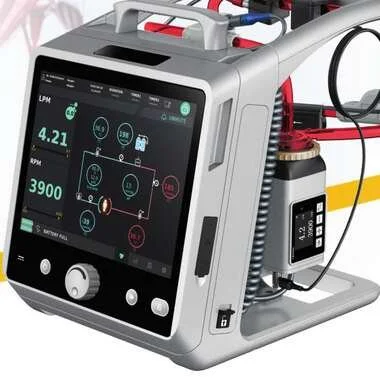
To learn more about the Lifemotion ECMO system — ARTG-listed and exclusively distributed across Australia and New Zealand by OHM Healthcare — visit us.
For physiotherapists, ICU nurses and ECMO clinicians. Educational only — physiotherapy on ECMO requires multidisciplinary team coordination and institutional protocols.

 Request Demonstration →
Service Support →
Request Demonstration →
Service Support →