ICU nurses are at the bedside 24 hours a day, making them the first line of detection for circuit problems, patient deterioration, and complication management in ECMO. A thorough understanding of every ECMO circuit component — and what to look for — is fundamental to safe ECMO nursing practice. This article provides a component-by-component overview tailored to ICU nurses caring for ECMO patients.
1. The drainage cannula
The drainage (venous) cannula draws blood from the patient toward the pump. It is the largest cannula. Key nursing observations:
- Inspect insertion site for bleeding, haematoma, or signs of infection
- Secure dressings changed per protocol
- Observe for "chattering" — vibration of the drainage line — which indicates insufficient venous return (hypovolaemia, tamponade, positional obstruction)
- Note and document cannula insertion depth markings
2. The centrifugal pump
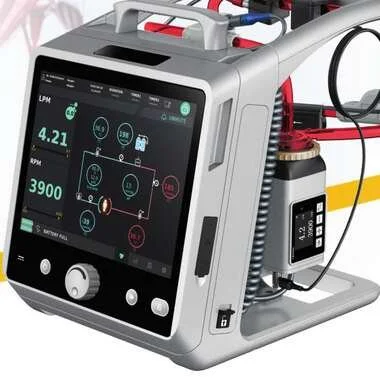
The pump drives blood through the circuit at a set speed (RPM). Nursing considerations:
- Flow (L/min) and RPM are continuously displayed — know your patient's target flow
- A sudden drop in flow at the same RPM suggests increased resistance (e.g., clot in the oxygenator or return cannula)
- Inspect the pump head for visible clot or discolouration
- Plasma-free haemoglobin (haemolysis marker) is elevated with pump thrombosis
3. The oxygenator
The oxygenator exchanges O₂ and CO₂. Nursing observations:
- Colour change: blood entering the oxygenator is dark (deoxygenated); exiting blood is bright red. Pale or discoloured exit blood indicates oxygenator failure
- Inspect for white fibrin deposits or clot in the oxygenator header
- Pressure drop across the oxygenator — recorded by some centres using inline pressure transducers; rising pressure drop indicates progressive thrombosis
- Plasma leak from the sweep gas outlet (pink-tinged condensate) indicates oxygenator membrane failure
4. The sweep gas circuit
Sweep gas (O₂ or blended air/O₂) flows through the oxygenator to exchange CO₂. The gas outlet (exhaust) should be vented safely away from the patient environment. Observe:
- Sweep gas flow rate (L/min) and FiO₂ are set by the ECMO physician — document and report any change
- If gas flow stops, CO₂ removal ceases — an emergency if prolonged
5. The heat exchanger
Maintains blood at set temperature. Nursing points:
- Check water temperature set point and water bath level
- Temperature of returning blood should match set temperature
- Hypothermia in returning blood can indicate heat exchanger failure
6. The return cannula
Returns oxygenated blood to the patient. For VA ECMO femoral return: inspect the ipsilateral limb at every assessment — compare colour, temperature and Doppler signal with the contralateral side. Ensure distal perfusion cannula is patent and flowing.
Emergency circuit responses
Every ECMO nurse must know the emergency procedures for: circuit disconnection (clamp, notify team immediately), air in circuit (clamp, call for help, no air should reach patient), and power failure (initiate hand-crank or battery backup per protocol).
To learn more about the Lifemotion ECMO system — ARTG-listed and exclusively distributed across Australia and New Zealand by OHM Healthcare — visit us.
For ICU nurses and healthcare professionals. Educational only — refer to your institution's ECMO nursing protocol and competency framework.

 Request Demonstration →
Service Support →
Request Demonstration →
Service Support →