This article is intended for healthcare professionals with training in ECMO management.
The ECMO circuit is primed before a single millilitre of patient blood enters the system. How that priming is performed has direct implications for the patient's first minutes on support.
What priming accomplishes
Priming removes air from the circuit, equilibrates the disposable components, and establishes the fluid column the centrifugal pump needs to operate. These are not incidental steps — a circuit that is poorly primed introduces air into the bloodstream, and the centrifugal pump cannot generate adequate flow against a circuit that is not fully fluid-filled.
In crystalloid-primed circuits, the initial priming volume produces haemodilution when it mixes with the patient's blood at cannulation. A 300 mL oxygenator priming volume, plus the tubing, produces a predictable dilutional reduction in haemoglobin. For patients with already compromised oxygen-carrying capacity, this dilution is a clinical consideration at the time of initiation.
Some centres use blood prime for neonatal or paediatric ECMO to attenuate this effect. For adult programmes, the approach varies by institutional protocol and patient-specific factors.
Speed versus preparation
In VA-ECMO for time-critical indications, the tradeoff between cannulation speed and circuit preparation time is real. Every minute spent priming is a minute in which the clinical situation is not being addressed by the circuit.
This tradeoff is managed, not resolved — but it is managed more safely when the priming process is systematic and practised. A team that has drilled the priming sequence repeatedly, using a reproducible checklist, can complete the process faster and with fewer errors under pressure than a team encountering it less frequently.
Guided priming sequences — step-by-step checklists that structure the air removal and connection process — reduce the risk of air entrainment and connection errors, particularly in time-critical activations.
Implications for training
Priming is a skill that degrades without practice. ECMO programmes that run infrequently should consider simulation-based priming training as part of their maintenance of competency programme, independent of live ECMO activations.
The priming process is an appropriate focus for simulation and competency assessment — it can be fully practised on a mock circuit, allows repetitive drilling, and has clear, assessable endpoints.
The Lifemotion approach
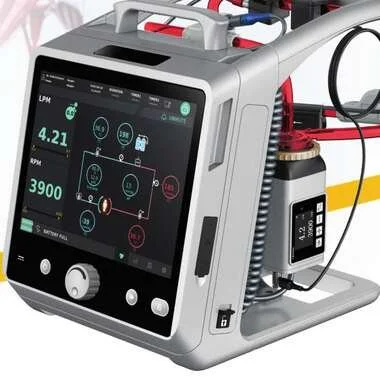
The Lifemotion ECMO platform incorporates a guided priming interface designed to structure the priming process step by step. This is an engineering feature of the platform — it describes how the system is designed to support the priming workflow, not an outcome claim.
For programme teams evaluating the platform, the priming process is a natural focus of a wet-lab demonstration session.
Contact OHM Healthcare at sales@ohmhealthcare.com.au or visit lifemotionecmo.com.au to arrange a session.
For healthcare professionals and healthcare organisations. Product availability and specifications subject to the locally approved Instructions for Use.
OHM Healthcare · sales@ohmhealthcare.com.au · 03 9115 7464 · lifemotionecmo.com.au

 Request Demonstration →
Service Support →