The most important thing to understand about ECMO is that the device is not the programme.
An ECMO pump and oxygenator are tools. What determines whether a team uses them well — and whether the investment in them delivers value over time — is the programme architecture built around the hardware. Across Australia and New Zealand, critical care teams are increasingly recognising that sustainable ECMO delivery requires far more than the hardware itself.
Here are five pillars that matter.
1. Dedicated ECMO coordinators
An ECMO coordinator holds the institutional memory of the programme. They manage the consumable supply chain, coordinate training schedules, track competency, and ensure the programme's governance documentation stays current. Without this role, programmes often run well during their first active period and then gradually fragment as staff rotate and institutional knowledge disperses.
2. Simulation-based team training
The clinical decisions made in the first minutes of an ECMO activation are made under significant time and cognitive pressure. Competency built through simulation — not waiting for the next real case — is what allows teams to perform their roles accurately when the pressure is highest. Regular simulation, with structured debrief and documented outcomes, is a hallmark of programmes that sustain quality over time.
3. Clear indications and decision-support frameworks
Ambiguity in initiation criteria is one of the most consistent findings in ECMO programme governance reviews. A programme that lacks a clearly documented and regularly reviewed set of indication criteria places the initiation decision entirely on the clinical team at the bedside. Decision-support frameworks — developed through multidisciplinary consensus and regularly updated — reduce this ambiguity and support consistent, defensible decision-making.
4. Data collection and quality improvement
ECMO programmes that submit data to registries like ELSO have access to benchmarking information that individual centres cannot generate alone. Beyond external reporting, internal data collection — tracking cases, complications, circuit events, and outcomes — feeds the quality improvement process that keeps a programme learning.
5. Retrieval capability
In the ANZ context, retrieval is not a secondary capability — it is often the reason a programme exists. The geography of Australia and New Zealand means that patients in regional or rural settings who need ECMO support may be hundreds of kilometres from an ECMO centre. Building retrieval capability into the programme design from the outset — including mobile ECMO logistics, transport team training, and equipment designed for road and air transport — determines whether the programme's reach matches the population's need.
OHM Healthcare's role
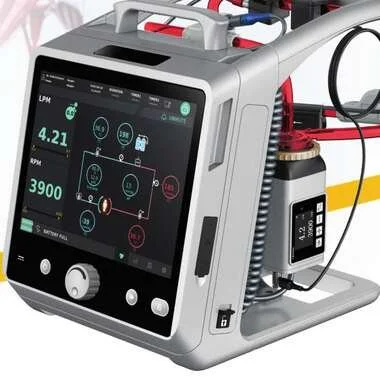
OHM Healthcare is the exclusive ANZ distributor for the Lifemotion ECMO platform. Beyond device supply, OHM Healthcare provides the local clinical engineering infrastructure that supports programme sustainability: installation, training support, preventive maintenance, consumable management, and technical response.
For teams building or expanding an ECMO programme in Australia or New Zealand, contact us at sales@ohmhealthcare.com.au or visit lifemotionecmo.com.au.
For healthcare professionals and healthcare organisations. Product availability and specifications subject to the locally approved Instructions for Use.
OHM Healthcare · sales@ohmhealthcare.com.au · 03 9115 7464 · lifemotionecmo.com.au

 Request Demonstration →
Service Support →