ECMO is not a machine. It is a system — and every member of the team has a distinct, non-interchangeable role.
Understanding those roles — and the governance structures that hold them together — is fundamental to building a sustainable ECMO programme. This is as true for a programme establishing ECMO for the first time as it is for one expanding an established service.
Core roles in a well-functioning ECMO programme
Intensivist / ECMO physician — Overall patient management, weaning strategy, escalation pathways, and goals of care. The clinical lead for the programme, responsible for indication decision-making and for maintaining the governance standards the programme operates within.
Perfusionist — Circuit management, flow and pressure monitoring, troubleshooting, and component changeouts. In many ANZ programmes, the perfusionist carries primary responsibility for circuit integrity during support and is the first point of escalation for circuit-related problems.
Cardiothoracic or vascular surgeon — Surgical cannulation for central VA-ECMO, decannulation, and management of surgical bleeding complications. Not all cannulation requires open surgical approach, but the surgical team is an essential component of programme governance.
Interventional cardiologist — Percutaneous cannulation, concurrent coronary angiography and percutaneous coronary intervention in programmes running ECPR pathways. The cardiologist's role in a cardiac programme differs significantly from a respiratory-focused service.
ECMO nurse / coordinator — Bedside circuit monitoring, alarm response, documentation, and patient care continuity across shifts. ECMO nurses carry the sustained vigilance responsibility during support; their training and competency credentialing is a programme quality indicator.
Biomedical and clinical engineer — Incoming inspections, preventive maintenance, equipment troubleshooting, consumable inventory, and supply management. Often underrepresented in programme governance discussions, but central to equipment reliability and regulatory compliance.
Hospital procurement — ARTG-registered device and consumable sourcing, supply chain continuity, service agreements, and capital planning. Procurement's understanding of the regulatory and supply requirements for ECMO disposables directly affects the programme's operational reliability.
Governance frameworks
ELSO training standards define minimum competencies for each discipline. Credentialled ECMO programmes require structured governance, formal competency assessment, and documented escalation protocols.
For programmes in the ANZ context, additional considerations include retrieval capability, relationships with regional services, and the specific geography of the patient population the programme serves.
OHM Healthcare's support role
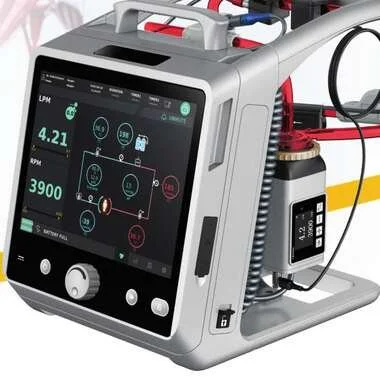
OHM Healthcare provides local clinical engineering and biomedical support for the Lifemotion ECMO platform across Australia. Supply in New Zealand is subject to New Zealand regulatory requirements.
For programme teams establishing or expanding ECMO services, OHM Healthcare supports the biomedical engineering component — incoming inspections, preventive maintenance, consumable supply management, and technical response — as part of the full lifecycle support model.
Contact OHM Healthcare at sales@ohmhealthcare.com.au or visit lifemotionecmo.com.au.
For healthcare professionals and healthcare organisations. Product availability and specifications subject to the locally approved Instructions for Use.
OHM Healthcare · sales@ohmhealthcare.com.au · 03 9115 7464 · lifemotionecmo.com.au

 Request Demonstration →
Service Support →