The ability to initiate ECMO at a referring hospital and transport a patient safely to an ECMO centre — or to fly a retrieval team to a remote location, cannulate, and return — is one of the defining capabilities of mature ECMO programmes. Australia's geography makes this particularly important: patients in rural and regional areas, and across the Pacific Islands, depend on retrieval ECMO to access life-saving care that would otherwise be unreachable.
Why retrieval ECMO matters in Australia
Australia is the world's sixth-largest country by area, with a population concentrated in coastal cities and dispersed regional communities separated by vast distances. New South Wales alone covers 800,000 km². Patients in regional hospitals with refractory ARDS or cardiac arrest cannot wait 12–24 hours for conventional transfer on ventilator — they will not survive. Mobile ECMO retrieval allows teams to bring ECMO to the patient, stabilise them on circuit, and transport them to definitive care.
NSW ECLS retrieval programme
The NSW Extracorporeal Life Support (ECLS) retrieval programme — coordinated through Royal Prince Alfred Hospital and St Vincent's Hospital Sydney — has operated since 2007 and is one of the most active ECMO retrieval programmes in the world. Key data from published series:
- 164 ECMO transports over a nine-year period
- 74% VV ECMO, 26% VA ECMO
- Transport by road (65%), retrieval jet (25%), helicopter (10%)
- Transfers from metropolitan, rural, interstate and international origins
- Outcomes comparable to patients cannulated at the ECMO centre
The Victorian ECMO Service (VECMOS)
Victoria's statewide networked ECMO service (VECMOS) coordinates ECMO retrieval across the state, with the Alfred Hospital as the primary hub. VECMOS was expanded in 2020 and includes formal retrieval pathways for hospitals across regional Victoria and interstate referrals.
What makes transport ECMO safe?
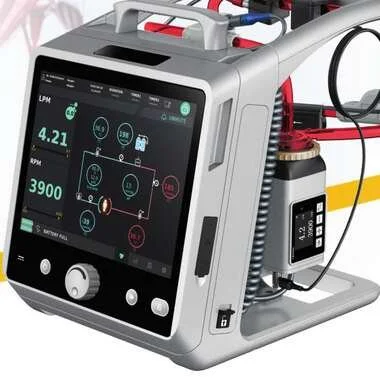
- Portable, integrated console: the ECMO machine must be compact, battery-powered for extended periods, and designed for transport. The Lifemotion ECMO system is built with mobility as a core design principle, including battery autonomy for retrieval runs
- Cannula security: meticulous fixation of all cannulae before transport to prevent dislodgement during vibration and patient movement
- Experienced retrieval team: typically ECMO-trained intensivist + perfusionist or ECMO-trained nurse/paramedic
- Coordination: ECMO retrieval requires real-time communication between the referring hospital, retrieval team, receiving centre, and transport service
Paediatric mobile ECMO: KERS
NSW's Kids ECMO Retrieval Service (KERS) enables ECMO to be delivered on the road for critically ill children, using purpose-designed mobile equipment and specialist paediatric retrieval teams. This has transformed access to ECMO for children in regional NSW.
To learn more about the Lifemotion ECMO system — ARTG-listed and exclusively distributed across Australia and New Zealand by OHM Healthcare — visit us.
For healthcare professionals. Educational only — ECMO retrieval requires specialist training, institutional infrastructure, and service agreements.

 Request Demonstration →
Service Support →
Request Demonstration →
Service Support →