Massive pulmonary embolism — PE causing haemodynamic instability (systolic BP <90 mmHg sustained, or cardiac arrest) — carries a mortality exceeding 30–50% with conventional management alone. When standard resuscitation fails or is contraindicated, VA ECMO offers a powerful bridge: supporting the failing right ventricle (RV) while allowing systemic thrombolysis, catheter-directed therapy, or surgical embolectomy to clear the obstructed pulmonary vasculature.
The pathophysiology of massive PE
Large PE causes acute RV pressure overload. The distended, hypokinetic RV compresses the interventricular septum (D-sign on echo), reducing LV filling and cardiac output. The combination of hypoxia, hypotension, and RV ischaemia can rapidly lead to cardiac arrest. Conventional vasopressors temporarily support systemic pressure but do not address the fundamental problem — obstructed pulmonary blood flow.
How VA ECMO helps in massive PE
VA ECMO drains blood from the right heart (reducing RV preload and distension) and returns it oxygenated to the arterial circulation, bypassing the obstructed pulmonary vasculature entirely. This:
- Restores systemic perfusion immediately
- Decompresses the distended RV
- Provides time for thrombolysis to work (peak effect 24–48 hours)
- Allows surgical embolectomy under more stable conditions
ECPR for PE-induced cardiac arrest
VA ECMO can be deployed during active CPR for PE-induced cardiac arrest — a form of ECPR specifically for obstructive shock. Unlike ischaemic cardiac arrest, the underlying cause (PE) is definitively treatable, making the case for ECPR particularly compelling. Survival rates for ECPR-PE at experienced centres approach 50–70% in selected patients.
Thrombolysis on ECMO: haemorrhagic risk
Systemic thrombolysis during ECMO carries significant bleeding risk, particularly at cannulation sites. The risk-benefit balance typically favours thrombolysis when PE is causing refractory haemodynamic instability. Anticoagulation targets are adjusted post-thrombolysis. Catheter-directed thrombolysis (at lower systemic drug doses) may reduce bleeding risk.
Surgical embolectomy under ECMO
Patients not responding to thrombolysis — or in whom it is contraindicated — may proceed to surgical pulmonary embolectomy, ideally performed on VA ECMO support. Removing the embolus directly decompresses the pulmonary vasculature rapidly and allows ECMO to be weaned as RV function recovers.
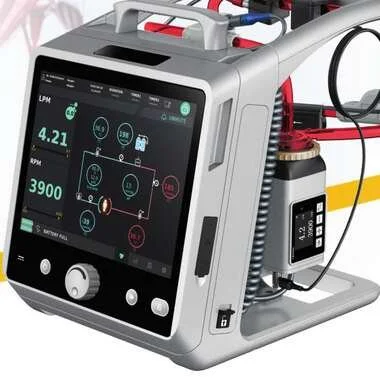
To learn more about the Lifemotion ECMO system — ARTG-listed and exclusively distributed across Australia and New Zealand by OHM Healthcare — visit us.
For healthcare professionals. Educational only — massive PE requires rapid multidisciplinary decision-making at specialist centres.

 Request Demonstration →
Service Support →
Request Demonstration →
Service Support →