When a patient develops severe respiratory failure, two technologies often come into the picture: mechanical ventilation and ECMO. Both support gas exchange, but they work through entirely different mechanisms and are used at different points in the clinical course. Understanding the distinction helps clinicians, patients and families make sense of treatment decisions in the ICU.
How mechanical ventilation works
A mechanical ventilator delivers gas — oxygen mixed with air — into the lungs through an endotracheal or tracheostomy tube. It works by assisting or replacing the mechanical act of breathing: the ventilator generates positive pressure to inflate the lungs, then allows passive exhalation. Gas exchange still depends on the patient's own lung tissue. If the lungs are severely inflamed, oedematous or collapsed — as in severe ARDS — the ventilator must work harder, and high pressures and volumes become necessary to maintain oxygenation. These high settings themselves cause additional injury (ventilator-induced lung injury, VILI).
How ECMO works as a lung replacement
VV ECMO bypasses the lungs for the purpose of gas exchange. Blood is drained from the patient, oxygenated and decarbonated through an external membrane oxygenator, and returned — all without requiring air to flow through the damaged lung tissue. When ECMO is running, the ventilator can be set to "lung rest" — low pressures, low volumes, low oxygen — allowing the lungs to heal without ongoing injury from aggressive ventilation.
When is ECMO added to mechanical ventilation?
ECMO is not a replacement for starting a ventilator. The typical clinical sequence in severe ARDS is:
- Intubation and mechanical ventilation
- Lung-protective ventilation (tidal volume 6 mL/kg, PEEP titrated)
- Prone positioning for 16+ hours per day
- Neuromuscular blockade if needed
- VV ECMO when oxygenation or ventilation remains refractory to all of the above
The CESAR and EOLIA trials established that referral to an ECMO centre improves outcomes in carefully selected patients with severe ARDS. Current ANZ guidelines (2026) using GRADE methodology provide specific oxygenation thresholds for ECMO consideration.
Key differences at a glance
| Feature | Ventilator | VV ECMO |
|---|---|---|
| Mechanism | Delivers gas to lungs | Oxygenates blood externally |
| Depends on lung function | Yes | No |
| Complexity | High | Very high |
| Used alone? | Yes | Usually alongside ventilator |
| Primary use | Most respiratory failure | Refractory severe ARDS / failure |
Does the patient still need a ventilator on ECMO?
Yes — in most cases. The lungs still need some airway support even while ECMO handles gas exchange. However, on ECMO the ventilator is set at the gentlest possible settings to allow lung recovery. In some patients (particularly those on VV ECMO who are awake and breathing spontaneously), the ventilator can be removed entirely — a strategy called "awake ECMO" — which avoids the complications of prolonged ventilation and sedation.
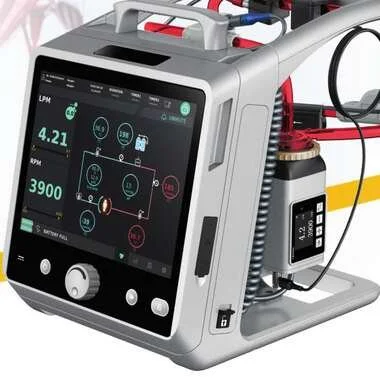
To learn more about the Lifemotion ECMO system — ARTG-listed and exclusively distributed across Australia and New Zealand by OHM Healthcare — visit us.
For healthcare professionals and general readers. Educational only — refer to clinical guidelines and institutional protocols.

 Request Demonstration →
Service Support →
Request Demonstration →
Service Support →