An ECMO machine is an external life support circuit that temporarily replaces the oxygenating function of the lungs, the pumping function of the heart, or both. Understanding each component helps ICU nurses, perfusionists and clinical teams recognise how the system behaves — and what to watch for when it does not.
The ECMO cannulae
Cannulae are the large-bore tubes placed into the patient's blood vessels. In venovenous (VV) ECMO, both cannulae sit in veins — typically the femoral vein for drainage and the internal jugular vein for return. In venoarterial (VA) ECMO, blood is drained from a vein and returned to an artery (usually femoral artery or ascending aorta). Cannula position determines flow efficiency and oxygenated blood delivery.
The centrifugal pump
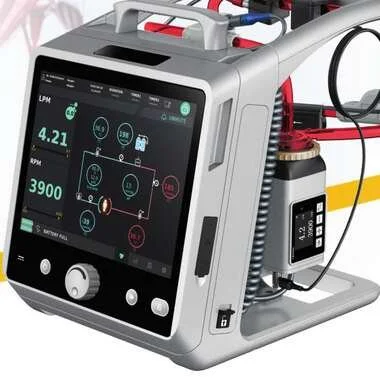
A magnetically levitated or bearings-based centrifugal pump generates the negative pressure that draws blood from the patient and the positive pressure that propels it through the circuit. Flow is measured in litres per minute (L/min) and is set by the clinician based on the patient's body surface area and degree of cardiorespiratory support required. Modern pumps — including the Lifemotion centrifugal pump head — are designed to minimise haemolysis and thrombotic risk over extended support durations.
The membrane oxygenator
The oxygenator is the heart of the ECMO circuit. Blood flows through one side of a hollow-fibre membrane bundle; oxygen-enriched sweep gas flows counter-currently on the other side. Oxygen diffuses into the blood; carbon dioxide diffuses out. The fraction of inspired oxygen (FiO₂) to the oxygenator and the sweep gas flow rate (which controls CO₂ removal) are adjusted separately, giving clinicians fine control over gas exchange independent of the patient's native lung function.
The heat exchanger
Blood cools as it travels through the external circuit. A heat exchanger — often integrated into the oxygenator module — warms returning blood to physiological temperature. In therapeutic hypothermia scenarios (such as post-cardiac arrest cooling), the heat exchanger can also be used to actively cool patients.
The console and monitoring
The control console manages pump speed (revolutions per minute), displays flow rate, arterial and venous line pressures, and integrates alarm systems for circuit events such as suction (low inlet pressure), high outlet pressure, and air detection. Integrated consoles combine these functions with the oxygenator and pump into a single portable unit — a significant advantage for mobile ECMO retrieval and transport between hospitals.
The ECMO circuit in practice
Blood travels in a continuous loop: from patient → drainage cannula → pump → oxygenator → return cannula → patient. Total priming volume (the blood volume in the circuit) for adult ECMO circuits is typically 500–800 mL. Anticoagulation — most commonly unfractionated heparin — is required to prevent clotting within the circuit.
Key monitoring targets on ECMO: Circuit flows 4–6 L/min (adult), sweep gas titrated to PaCO₂, FiO₂ adjusted to achieve acceptable post-oxygenator saturations, ACT or anti-Xa used to monitor anticoagulation.
ECMO circuit changes
Circuit components — particularly the oxygenator — have a limited lifespan. Fibrin and platelet deposition reduce oxygenator efficiency over time. When oxygenator function deteriorates (detected by worsening post-membrane saturations or increasing pressure drop), circuit or oxygenator change-out is required, an operation performed at the bedside with meticulous attention to anticoagulation and air exclusion.
To learn more about the Lifemotion ECMO system — ARTG-listed and exclusively distributed across Australia and New Zealand by OHM Healthcare — visit us.
For healthcare professionals. Educational content only — refer to your institution's protocols and the device IFU.

 Request Demonstration →
Service Support →
Request Demonstration →
Service Support →