Extracorporeal membrane oxygenation — ECMO — is a form of life support that takes over the work of the heart, the lungs, or both when they are too sick to sustain the body on their own. Blood is drawn from the patient, circulated through an external machine that oxygenates it and removes carbon dioxide, then returned to the body. The word "extracorporeal" means simply that this happens outside the body.
ECMO is used in intensive care units across Australia and New Zealand for adults, children and newborns who have suffered severe respiratory or cardiac failure that has not responded to maximal conventional treatment. It does not cure the underlying condition, but it buys time — time for the heart or lungs to recover, time for a bridge to a device or transplant, or time to allow clinicians to reach a clear prognosis.
VV ECMO vs VA ECMO: the two main types
There are two principal configurations of ECMO:
- Venovenous ECMO (VV ECMO) supports the lungs. Blood is drained from a vein, oxygenated, and returned to a vein. The patient's own heart still pumps the blood around the body. VV ECMO is used in severe respiratory failure, most commonly acute respiratory distress syndrome (ARDS).
- Venoarterial ECMO (VA ECMO) supports both the heart and the lungs. Blood is drained from a vein and returned to an artery, bypassing the heart. VA ECMO is used in cardiogenic shock, refractory cardiac arrest (extracorporeal CPR / ECPR), and post-cardiotomy failure.
Key components of an ECMO system
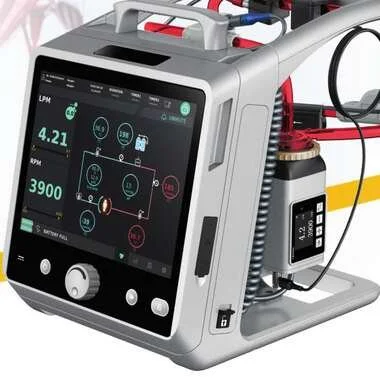
All ECMO systems share four core components: cannulae (the tubes inserted into the patient's blood vessels), a centrifugal pump that drives flow, a membrane oxygenator that exchanges gases, and a heat exchanger that maintains body temperature. Modern integrated consoles like the Lifemotion ECMO system combine the pump, oxygenator, monitoring, and alarm systems into a single, mobile platform — an important feature for retrieval and inter-hospital transport.
Who provides ECMO in Australia and New Zealand?
ECMO is a highly specialised therapy offered at a relatively small number of tertiary centres across Australia and New Zealand, including teaching hospitals in Sydney, Melbourne, Brisbane, Perth, Adelaide and Auckland. Retrieval networks — such as the NSW ECLS program and Victoria's VECMOS service — coordinate transport of patients on ECMO from regional and rural hospitals to specialist centres.
The Extracorporeal Life Support Organization (ELSO) maintains an international registry of ECMO outcomes. In Australia and New Zealand, the ANZICS ECMO registry tracks activity and outcomes across both countries.
Is ECMO the same as bypass during heart surgery?
Cardiopulmonary bypass (CPB) and ECMO both use an external circuit to oxygenate blood, but they are distinct. CPB is used in a controlled surgical setting for a matter of hours; ECMO is designed for days to weeks of continuous support in the ICU, using smaller cannulae and lower blood priming volumes. Modern ECMO circuits use heparin-bonded surfaces to reduce the need for high doses of anticoagulation.
What happens after ECMO?
Outcomes depend heavily on the underlying diagnosis, the patient's condition before ECMO was started, and how the support is managed. When the heart and lungs have recovered sufficiently, ECMO is weaned gradually and the cannulae are removed. Not all patients survive ECMO — it is a treatment for life-threatening illness — but survival rates for well-selected patients with severe ARDS on VV ECMO are reported at 50–70% in large international series.
To learn more about the Lifemotion ECMO system — ARTG-listed and exclusively distributed across Australia and New Zealand by OHM Healthcare — visit us.
For healthcare professionals and the general public. This content is educational and does not substitute for clinical judgment, institutional protocols, or the device Instructions for Use.

 Request Demonstration →
Service Support →
Request Demonstration →
Service Support →