Extracorporeal cardiopulmonary resuscitation — ECPR — is the rapid deployment of venoarterial ECMO during active cardiac arrest resuscitation, when conventional CPR has failed to restore spontaneous circulation. It represents one of the most dramatic applications of ECMO, transforming what was previously a uniformly fatal situation into a condition with a meaningful chance of survival and neurological recovery.
What is refractory cardiac arrest?
Cardiac arrest is considered refractory when spontaneous circulation has not been restored after ≥20–30 minutes of conventional advanced life support including CPR, defibrillation, and adrenaline. Outcomes with conventional CPR beyond this point are very poor. ECPR provides mechanical circulatory support that can maintain organ perfusion — including cerebral perfusion — while the underlying cause of arrest is identified and treated.
Landmark evidence
The ARREST trial (Minneapolis, USA, 2020) was stopped early due to overwhelming benefit: patients with refractory ventricular fibrillation treated with ECPR had 43% survival to hospital discharge at 6 months, compared with 7% with conventional care. The Prague OHCA study (Czech Republic) showed similar benefit for out-of-hospital cardiac arrest. These are among the most striking results in resuscitation medicine in decades.
Patient selection for ECPR
Not all patients in cardiac arrest are candidates for ECPR. Selection criteria at most centres include:
- Witnessed arrest (time of collapse known)
- Shockable rhythm (VF or pulseless VT) — or selected non-shockable causes (massive PE, hypothermia, drug toxicity)
- Bystander CPR initiated promptly (low-flow time < 5 minutes)
- Age typically < 70 years (varies by centre and patient comorbidity)
- No obvious futility (terminal illness, prolonged no-flow time)
- Arrival at or ability to reach an ECPR-capable centre within ~60 minutes of arrest
ECPR in Australian hospitals
Several Australian hospitals now offer ECPR programmes, including the Alfred Hospital in Melbourne (which has operated a 24/7 ECPR programme since 2012), and centres in Sydney and Brisbane. The Alfred ECPR programme is one of the longest-running in the southern hemisphere and has published outcomes data demonstrating feasibility and survival benefit in selected patients.
The treatment pathway
- Patient arrives in ED or cath lab in cardiac arrest with ongoing CPR
- Simultaneous assessment for ECPR eligibility and preparation of circuit
- Rapid cannulation (femoral vein and artery) — target < 20 minutes from arrival
- ECMO flow established — CPR stops when adequate circuit flow achieved
- Coronary angiography, reperfusion or treatment of reversible cause
- Transfer to ICU — neurological assessment guides further management
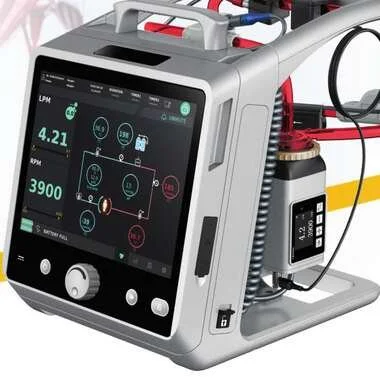
To learn more about the Lifemotion ECMO system — ARTG-listed and exclusively distributed across Australia and New Zealand by OHM Healthcare — visit us.
For healthcare professionals. Educational only — ECPR programmes require institutional infrastructure, team training, and governance frameworks.

 Request Demonstration →
Service Support →
Request Demonstration →
Service Support →