Cardiogenic shock — the failure of the heart to maintain adequate cardiac output and tissue perfusion despite adequate preload — carries a mortality of 40–50% even with optimal medical management. Venoarterial ECMO (VA ECMO) provides biventricular support and oxygenation simultaneously, making it the most powerful short-term mechanical circulatory support (MCS) device available. This article reviews the indications, cannulation strategy, and management of VA ECMO in cardiogenic shock.
What is cardiogenic shock?
The Society for Cardiovascular Angiography and Interventions (SCAI) classification of cardiogenic shock stages from A (at-risk) to E (extremis) guides clinical decision-making. VA ECMO is most commonly deployed at stages D (deteriorating) and E (extremis), when the heart has failed despite vasopressors, inotropes, or an intra-aortic balloon pump (IABP).
Common causes requiring VA ECMO
- Acute myocardial infarction with cardiogenic shock (AMI-CS)
- Acute myocarditis (including fulminant lymphocytic, giant cell myocarditis)
- Post-cardiotomy shock after cardiac surgery
- Refractory ventricular arrhythmia
- Massive pulmonary embolism (as a bridge to surgical embolectomy or thrombolysis)
- Drug toxicity causing profound cardiac depression (beta-blocker, calcium channel blocker overdose)
Peripheral VA ECMO cannulation
The standard approach is peripheral cannulation: drainage from the femoral vein (20–24 Fr), return to the femoral artery (15–17 Fr). This can be performed rapidly in the catheterisation laboratory, ICU, or emergency department — without cardiothoracic surgery. A distal perfusion cannula (DPC) is placed in the superficial femoral artery to prevent limb ischaemia, one of the most serious complications of femoral arterial cannulation.
Haemodynamic management on VA ECMO
VA ECMO restores systemic perfusion by generating a non-pulsatile flow of 3–5 L/min. Key management considerations include:
- Afterload: VA ECMO increases LV afterload; if the LV is severely impaired, it may distend (see LV venting article)
- Pulse pressure: very narrow pulse pressure indicates near-complete ECMO dependence; recovery is signalled by returning pulsatility
- Vasopressors: weaned as tolerated; aim for MAP 65–75 mmHg
- Monitoring: arterial line, mixed venous saturations, lactate, cardiac echo daily
Timing: earlier is better
A 2024 analysis of over 7,000 patients showed that each 12-hour delay from admission to VA ECMO initiation increased adjusted mortality by 6%. Early escalation to ECMO — before profound organ failure — is associated with improved outcomes.
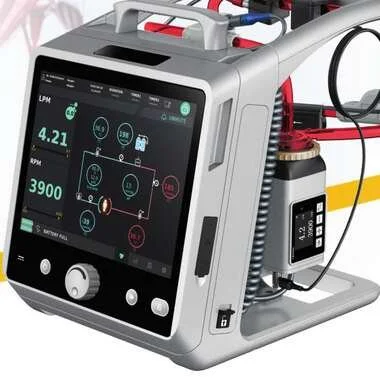
To learn more about the Lifemotion ECMO system — ARTG-listed and exclusively distributed across Australia and New Zealand by OHM Healthcare — visit us.
For healthcare professionals. Educational only — refer to current cardiogenic shock and ECMO guidelines for clinical decision-making.

 Request Demonstration →
Service Support →
Request Demonstration →
Service Support →