This article is intended for healthcare professionals with training in ECMO management.
Extracorporeal CPR — initiating VA-ECMO during cardiac arrest — is one of the most demanding interventions in resuscitation medicine. The clinical scenario offers no tolerance for process failure.
It only works when a large number of factors align simultaneously: the right patient, uninterrupted high-quality chest compressions from the moment of arrest, and a team that can cannulate under time pressure while the resuscitation is ongoing. Speed to ECMO is the variable that determines the opportunity cost of every process gap.
The centres that do ECPR well have invested heavily in something before the first real activation. Not in the device — in the process.
What ECPR readiness looks like
Role clarity under pressure. In an ECPR activation, every team member has a defined role. The compressions do not stop. The airway is managed. The access is obtained. The perfusionist prepares the circuit. The cannulating physician is free to cannulate. These roles are assigned before the activation — not allocated during it.
Priming speed as a practised skill. Circuit priming under time pressure is not faster because someone is trying harder. It is faster because it has been drilled until it is automatic. Teams that run regular simulation exercises — including timed priming drills — achieve shorter preparation times in real activations.
Checklists that survive cognitive load. When a resuscitation team is managing multiple simultaneous tasks, cognitive load is at its maximum. Checklists designed for this environment — brief, unambiguous, role-specific — reduce the risk of steps being missed under pressure.
Governance and decision criteria. ECPR programmes require clear, documented indication criteria. Which patients are candidates? What CPR duration is the ceiling? Who makes the initiation decision? The governance framework that answers these questions in advance is what prevents the initiation decision from becoming a team-by-team, case-by-case negotiation under pressure.
Equipment that is ready
An ECPR programme that cannot mobilise its equipment rapidly is not an ECPR programme — it is an aspiration. The ECMO system must be accessible, circuit components must be in date, and the team must be familiar with the priming and cannulation workflow.
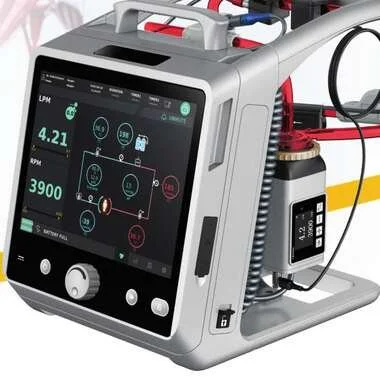
The Lifemotion ECMO platform's guided priming interface and integrated monitoring are engineering features designed to support rapid, structured circuit preparation. For ECPR applications, the ability to prime quickly, verify the circuit, and proceed to cannulation without ambiguity about system status are relevant platform attributes.
Building an ECPR programme
If your centre is considering establishing an ECPR capability, or reviewing an existing programme's readiness, OHM Healthcare is glad to contribute the clinical engineering perspective — device capability, procurement planning, maintenance requirements, and the technical preparation questions that sit alongside the clinical governance work.
Contact OHM Healthcare at sales@ohmhealthcare.com.au or visit lifemotionecmo.com.au.
For healthcare professionals and healthcare organisations. Product availability and specifications subject to the locally approved Instructions for Use.
OHM Healthcare · sales@ohmhealthcare.com.au · 03 9115 7464 · lifemotionecmo.com.au

 Request Demonstration →
Service Support →