This article is intended for healthcare professionals with training in ECMO management.
ECMO operates in two principal configurations. Understanding the physiological rationale for each is foundational to ECMO programme design and to understanding the clinical scope of an ECMO platform.
Venovenous ECMO (VV-ECMO)
In VV-ECMO, blood is drained from the venous system, passed through the oxygenator for gas exchange, and returned to the venous system near the right atrium. The patient's heart provides all native cardiac output — VV-ECMO provides respiratory support only. The right heart receives oxygenated blood from the ECMO return and pumps it to the pulmonary circulation.
VV-ECMO is applicable for patients with severe respiratory compromise who have adequate cardiac function. The goal is to maintain oxygen delivery and CO2 removal while the lungs rest or recover, or while the patient is bridged to a decision.
Cannulation is typically dual-site (femoral drainage and internal jugular return) or through a dual-lumen bicaval cannula placed via a single venous access point.
Veno-arterial ECMO (VA-ECMO)
In VA-ECMO, blood is drained from the venous system and returned directly to the arterial system — bypassing both the heart and lungs. VA-ECMO provides both respiratory support and haemodynamic support, partially or fully replacing cardiac output.
VA-ECMO is applicable for patients who require both cardiac and respiratory support. It is also the configuration used in ECPR — extracorporeal CPR during cardiac arrest.
Cannulation may be peripheral (femoral artery return and femoral or internal jugular drainage) or central (direct aortic return and right atrial drainage in a cardiac surgical setting).
Configuration selection
The selection between VV- and VA-ECMO is a clinical decision based on the patient's haemodynamic status and the dominant problem being addressed. Some patients require a configuration change as their clinical picture evolves — a patient stabilised on VV-ECMO who develops haemodynamic instability may transition to VA or VAV configuration.
ECMO programme governance frameworks should address the indications and decision criteria for each configuration, the team roles required, and the monitoring differences between configurations.
The Lifemotion platform
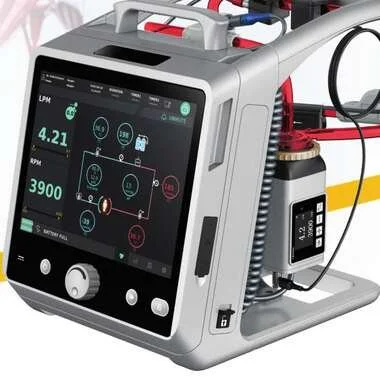
The Lifemotion ECMO system supports both VA and VV configurations. The platform's integrated monitoring — circuit pressures, flow, venous SpO2, haematocrit, haemoglobin — provides the bedside information relevant to both configurations from a single console display.
For programme teams building or reviewing ECMO governance documentation, the configuration-specific requirements — cannulation approach, monitoring parameters, weaning criteria — are appropriate topics for clinical working groups and for the clinical engineering team supporting the programme.
Contact OHM Healthcare at sales@ohmhealthcare.com.au or visit lifemotionecmo.com.au for enquiries.
For healthcare professionals and healthcare organisations. Product availability and specifications subject to the locally approved Instructions for Use.
OHM Healthcare · sales@ohmhealthcare.com.au · 03 9115 7464 · lifemotionecmo.com.au

 Request Demonstration →
Service Support →