One of the central rationales for initiating VV ECMO in severe ARDS is to permit "lung rest" — the ability to reduce ventilator settings to levels that minimise ongoing ventilator-induced lung injury (VILI) while ECMO handles gas exchange. But optimal ventilation strategy during ECMO is more nuanced than simply turning everything down. This article reviews the evidence and practice for mechanical ventilation once VV ECMO is established.
The concept of VILI and why it matters on ECMO
Ventilator-induced lung injury occurs through four main mechanisms: volutrauma (excess tidal volume), barotrauma (excess pressure), atelectrauma (cyclic collapse and recruitment), and biotrauma (cytokine release from injured lung). On conventional lung-protective ventilation, tidal volumes of 6 mL/kg and plateau pressures below 30 cmH₂O are standard. On ECMO, these constraints can be relaxed further because oxygenation and CO₂ removal are handled externally.
Ultra-protective ventilation targets on ECMO
The target ventilator settings during established VV ECMO lung rest are:
- Tidal volume: 3–4 mL/kg ideal body weight
- Respiratory rate: 5–12 breaths/minute
- Peak inspiratory pressure: < 20–25 cmH₂O
- PEEP: 8–12 cmH₂O (to maintain functional residual capacity)
- FiO₂: 0.3–0.4 (oxygenation managed by ECMO, not the ventilator)
Does ultra-protective ventilation improve outcomes?
The REDvent trial and several observational series support the safety of ultra-protective ventilation on ECMO. However, no large randomised trial has yet proven that lower VT/pressures on ECMO reduce mortality compared with standard protective ventilation. The VENT-AVOID trial (ongoing internationally) aims to address this question directly.
Spontaneous breathing and awake ECMO
Preservation of spontaneous breathing during ECMO — or even full extubation (awake ECMO) — is increasingly used at experienced centres. Advantages include: avoidance of sedation, maintenance of diaphragm function, earlier rehabilitation, and avoidance of ventilator-associated pneumonia. Awake ECMO requires highly cooperative patients, experienced nursing, and careful selection. It is particularly used as a bridge to lung transplantation.
Ventilator mode on ECMO
Pressure-controlled ventilation (PCV) or pressure-regulated volume control (PRVC) are commonly used, as they limit peak pressures. Airway pressure release ventilation (APRV) has also been used in some centres to promote spontaneous breathing while maintaining mean airway pressure. There is no definitive evidence favouring one mode over another during ECMO.
Monitoring and adjusting
Oesophageal pressure monitoring (to assess transpulmonary pressure) is used at some centres to individualise PEEP and tidal volume targets during ECMO, particularly in obese patients or those with markedly abnormal chest wall mechanics. Daily arterial blood gases — both from the patient and from the post-oxygenator circuit — guide titration of sweep gas and ventilator settings.
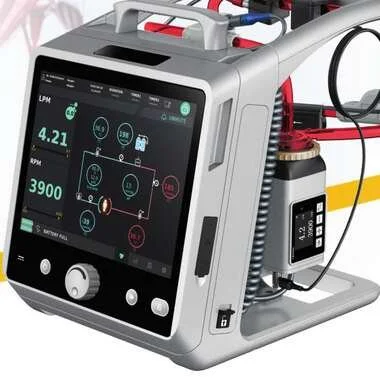
To learn more about the Lifemotion ECMO system — ARTG-listed and exclusively distributed across Australia and New Zealand by OHM Healthcare — visit us.
For healthcare professionals. Educational only — ventilation management on ECMO requires individualised clinical assessment.

 Request Demonstration →
Service Support →
Request Demonstration →
Service Support →