Successful weaning from venovenous ECMO represents the culmination of days or weeks of intensive management. Knowing when and how to wean — and how to avoid premature decannulation — is as important as the decision to initiate ECMO in the first place. This article outlines the clinical approach to VV ECMO weaning in adult patients.
When is weaning indicated?
Weaning should be considered when there is evidence of improving native lung function. Clinical and physiological markers include:
- Improving lung compliance on the ventilator
- Chest radiograph improvement (bilateral opacities clearing)
- Ability to maintain acceptable oxygenation as ECMO flow is progressively reduced
- Reduced oxygen requirement on the ventilator
- Patient able to maintain spontaneous breathing efforts
Recovery is assessed daily. There is no fixed timeline — some patients recover in a week, others take a month.
The weaning trial: step by step
VV ECMO is weaned by progressively reducing ECMO blood flow while maintaining ventilator settings at moderate (not lung rest) levels to assess whether native lung function can sustain gas exchange:
- Reduce ECMO flow in increments (e.g., from 4 L/min → 3 → 2 → 1 L/min) over hours
- At each step, assess SpO₂, tidal volume, work of breathing, PaCO₂
- If the patient tolerates 1–1.5 L/min flow for 2–4 hours with acceptable gas exchange, proceed to decannulation
- If the patient deteriorates, return to full ECMO support and reassess in 24–48 hours
Key point: During a weaning trial, sweep gas may be reduced to zero to test CO₂ clearance by the native lung independently of blood flow reduction. This "gas off" trial challenges the lungs more aggressively and is sometimes performed as the final assessment before decannulation.
Decannulation
Once the patient has passed a successful weaning trial, cannulae are removed. Femoral venous cannulae are typically removed at the bedside with manual compression and a purse-string suture. Jugular cannulae may require surgical assistance depending on size and duration. Anticoagulation is managed around decannulation to minimise bleeding risk while preventing thrombosis at the cannulation site.
Post-ECMO care
After decannulation, the patient typically continues on mechanical ventilation with a more active weaning protocol. Physiotherapy and rehabilitation are important — ECMO patients often have significant ICU-acquired weakness. Long-term follow-up at dedicated post-ICU or post-ECMO clinics is increasingly offered at Australian centres to address physical recovery, cognitive impairment, and psychological sequelae.
Failure to wean: bridging strategies
If weaning fails despite prolonged ECMO support and no evidence of lung recovery, the team must consider: continued ECMO as a bridge to lung transplant (at specialist transplant centres), transition to a different support modality, or goals-of-care discussion with the patient and family.
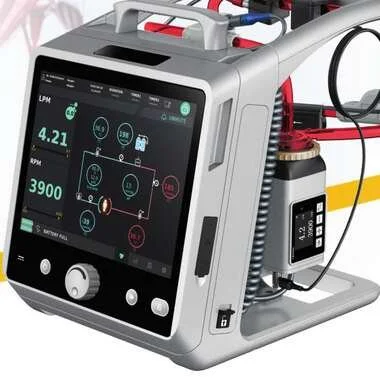
To learn more about the Lifemotion ECMO system — ARTG-listed and exclusively distributed across Australia and New Zealand by OHM Healthcare — visit us.
For healthcare professionals. Educational only — weaning decisions require individualised clinical assessment by an experienced ECMO team.

 Request Demonstration →
Service Support →
Request Demonstration →
Service Support →