Prone positioning is a well-established intervention for moderate-to-severe ARDS, improving oxygenation and reducing mortality when delivered for ≥16 hours per day. As VV ECMO becomes more widely used for the most severe cases of ARDS, a clinically important question has emerged: can — and should — patients on VV ECMO be proned?
Why prone positioning might still help on ECMO
Even with VV ECMO providing gas exchange support, prone positioning may offer additional benefit by:
- Improving dorsal lung recruitment and reducing dorsal atelectasis
- Allowing further reduction in ventilator settings (deeper lung rest)
- Reducing pulmonary hypertension through improved ventilation-perfusion matching
- Potentially accelerating lung recovery
In some cases, prone positioning is used before committing to ECMO as a final attempt at optimisation. In others, it is used after ECMO initiation to complement mechanical lung rest.
Evidence for prone ECMO
Several retrospective and observational series have demonstrated that prone positioning during VV ECMO is technically feasible and can be accomplished safely at experienced centres. A 2021 systematic review found that proning on ECMO was associated with improvements in oxygenation without an increase in serious adverse events. However, high-quality randomised data are limited, and the PRONECMO trial (Europe) is ongoing.
Practical challenges and safety considerations
Prone positioning on ECMO is logistically demanding. Specific risks include:
- Cannula dislodgement or kinking: the most serious complication; requires meticulous cannula securement and a coordinated turn with at least 5–6 team members
- Circuit disconnection: all connections must be checked and secured before and during the turn
- Pressure injuries: facial oedema, eye pressure, and cannula insertion sites require padding and positioning care
- Haemodynamic instability: monitor closely during and after turning
Which patients benefit most?
Patients most likely to benefit from prone ECMO are those with early, diffuse ARDS with significant dorsal consolidation on CT, who have failed prone positioning prior to ECMO. Patients with prolonged ARDS, extensive fibroproliferation, or purely obstructive pathology may not benefit from further proning once ECMO is established.
Australian practice
Several Australian ECMO centres — including the Alfred and RPA — have reported experience with prone ECMO in selected patients. Institutional protocols, simulation-based team training, and standardised checklists are used to mitigate the elevated procedural risk.
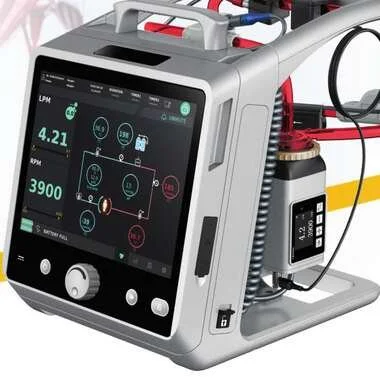
To learn more about the Lifemotion ECMO system — ARTG-listed and exclusively distributed across Australia and New Zealand by OHM Healthcare — visit us.
For healthcare professionals. Educational only — prone ECMO should be performed only at experienced centres with appropriate protocols.

 Request Demonstration →
Service Support →
Request Demonstration →
Service Support →