Initiating VV ECMO is the beginning, not the end, of clinical management. Once the circuit is running, the ICU team must optimise flows, gas exchange, anticoagulation, ventilator settings and patient physiology in a coordinated and dynamic way. This guide reviews the key management parameters for VV ECMO in adults.
Setting initial ECMO blood flow
Blood flow is the primary determinant of oxygen delivery on VV ECMO. Target flow is typically 60–80% of estimated cardiac output, or approximately 4–6 L/min in adults. Flow is limited by venous return — if the drainage cannula "sucks" (chatters, low inlet pressure), flow must be reduced. Hypovolaemia, tamponade and kinked cannulae are common causes of inadequate drainage.
Sweep gas: controlling CO₂
Sweep gas flow through the oxygenator controls CO₂ removal — almost independently of blood flow. Increasing sweep gas removes more CO₂ (lowering PaCO₂); decreasing it allows CO₂ to rise. This allows tight titration of arterial pH and PaCO₂. Sweep FiO₂ is typically 1.0 (100% oxygen) to maximise post-oxygenator saturation.
Monitoring oxygenation on VV ECMO
Oxygenation on VV ECMO is more complex than on VA ECMO because oxygenated blood returning through the return cannula mixes with deoxygenated blood from the right heart. The resulting SpO₂/SaO₂ is therefore lower than the post-oxygenator saturation. Targets are typically SpO₂ 88–95%. If oxygenation is inadequate at maximum flow and FiO₂ 1.0, options include:
- Checking for recirculation (return blood re-entering the drain cannula)
- Repositioning cannulae
- Adding a second drainage cannula
- Changing to a bicaval dual-lumen cannula (Avalon / Crescent type)
Lung rest ventilation strategy
With VV ECMO running, the ventilator is set to ultra-protective settings:
- Tidal volume: 3–4 mL/kg ideal body weight
- PEEP: 8–10 cmH₂O
- Respiratory rate: 10–12
- FiO₂: 0.3–0.4
- Peak inspiratory pressure: < 25 cmH₂O
Some centres use airway pressure release ventilation (APRV) or allow spontaneous breathing on ECMO to maintain diaphragm function and reduce ICU-acquired weakness.
Anticoagulation
Unfractionated heparin (UFH) is the standard anticoagulant. Monitoring uses activated clotting time (ACT, target 180–220 s) or anti-Xa level (target 0.3–0.5 IU/mL). Patients at high bleeding risk may be managed at lower targets or with heparin-free periods using heparin-bonded circuits.
Daily assessment
Each day on ECMO should include formal assessment of: oxygenator function (post-membrane PaO₂ and pressure drop), circuit for clots, lung compliance and recruitment, haemodynamic status, anticoagulation, nutritional targets, and prognosis/trajectory. These assessments guide the decision to continue, modify or wean ECMO support.
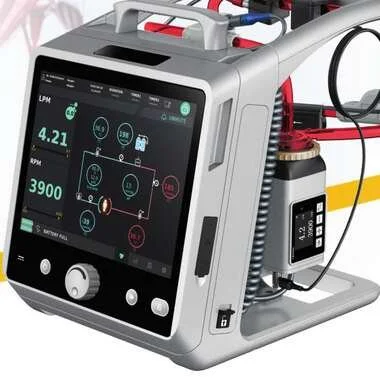
To learn more about the Lifemotion ECMO system — ARTG-listed and exclusively distributed across Australia and New Zealand by OHM Healthcare — visit us.
For healthcare professionals. Educational only — refer to your ECMO centre's protocols for specific management guidance.

 Request Demonstration →
Service Support →
Request Demonstration →
Service Support →