Acute respiratory distress syndrome (ARDS) is a life-threatening form of inflammatory lung injury characterised by bilateral pulmonary oedema, refractory hypoxaemia, and poor compliance. When conventional management — lung-protective ventilation, prone positioning, neuromuscular blockade — fails to maintain acceptable oxygenation, venovenous ECMO (VV ECMO) offers a pathway to support gas exchange while allowing the lungs to rest and recover.
Pathophysiology: why VV ECMO helps in ARDS
In severe ARDS, the lung parenchyma is diffusely injured and unable to oxygenate or decarbonate blood adequately. Escalating ventilator pressures risk further barotrauma and volutrauma. VV ECMO oxygenates blood through an external membrane, allowing the ventilator to be set at ultra-protective settings (tidal volume 3–4 mL/kg, PEEP 8–10 cmH₂O, FiO₂ 0.3) — conditions that minimise ongoing ventilator-induced lung injury (VILI) and allow the acute inflammatory process to resolve.
Indications for VV ECMO in ARDS
The 2026 ANZ VV ECMO guidelines (GRADE methodology) and international guidance broadly align on the following thresholds for ECMO consideration:
- PaO₂/FiO₂ ratio < 80 mmHg on FiO₂ ≥ 0.8 despite optimised ventilation
- Uncompensated hypercapnia with pH < 7.15 despite maximal ventilation
- Refractory hypoxaemia despite prone positioning for ≥ 16 hours, neuromuscular blockade, and optimised PEEP
Duration of mechanical ventilation before ECMO matters: after 7 days of high-pressure ventilation, cumulative VILI may already be severe, and benefit from ECMO declines.
Contraindications
Absolute contraindications include conditions that make survival unlikely regardless of ECMO support: irreversible brain damage, non-recoverable underlying disease, and futility as determined by the clinical team and family. Relative contraindications include advanced age combined with severe comorbidity, prolonged cardiac arrest without ECPR capability, and active intracranial haemorrhage (due to anticoagulation requirement).
Patient selection: the Murray score and practical criteria
The Murray lung injury score (incorporating PaO₂/FiO₂, PEEP, compliance, and chest radiograph score) has historically guided selection, with a score ≥ 3 indicating severe lung injury. Most centres also apply a clinical "ECMO eligibility" checklist that accounts for reversibility of the underlying cause, absence of absolute contraindications, and likelihood of meaningful recovery.
Evidence: the CESAR and EOLIA trials
The CESAR trial (UK, 2009) showed that referral to an ECMO centre improved 6-month survival without severe disability. The EOLIA trial (France/Europe, 2018) showed a non-significant 11% absolute reduction in 60-day mortality; a subsequent Bayesian analysis suggested a 96% probability that ECMO reduced mortality. The weight of evidence supports ECMO referral for appropriately selected patients.
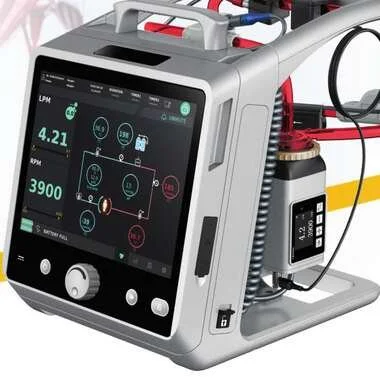
To learn more about the Lifemotion ECMO system — ARTG-listed and exclusively distributed across Australia and New Zealand by OHM Healthcare — visit us.
For healthcare professionals. Educational only — refer to current ANZ ECMO guidelines and institutional protocols for patient management decisions.

 Request Demonstration →
Service Support →
Request Demonstration →
Service Support →